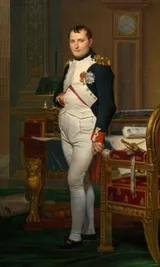

Roman Empire (now Turkey) Friday Dec 13, 115 Disasters with highest death tolls115 Antioch Earthquake
Roman Empire (now Turkey) Friday Dec 13, 115 The 115 Antioch earthquake occurred on 13 December 115 AD. It had an estimated magnitude of 7.5 on the surface wave magnitude scale and an estimated maximum intensity of XI (Extreme) on the Mercalli intensity scale. The origin of the reported death toll of 260,000 is uncertain, as it only appears in catalogues of about the last hundred years.
Han, China Monday Dec 10, 125 Rome, Roman Empire Monday Dec 31, 192 Rome Tuesday Dec 17, 211 Roman EmpireCaracalla tried unsuccessfully to murder Geta
Rome Tuesday Dec 17, 211 The current stability of their joint government was only through the mediation and leadership of their mother, Julia Domna, accompanied by other senior courtiers and generals in the military. The historian Herodian asserted that the brothers decided to split the empire into two halves, but with the strong opposition of their mother, the idea was rejected, when, by the end of 211, the situation had become unbearable. Caracalla tried unsuccessfully to murder Geta during the festival of Saturnalia (17 December).
Rome Thursday Dec 26, 211 Han, China Sunday Dec 10, 220 Rome Friday Dec 25, 274 Roman EmpireTemple of the Sun
Rome Friday Dec 25, 274 Aurelian strengthened the position of the Sun god Sol Invictus as the main divinity of the Roman pantheon. His intention was to give to all the peoples of the Empire, civilians or soldiers, easterners or westerners, a single god they could believe in without betraying their own gods. The centre of the cult was a new temple, built in 274 and dedicated on December 25 of that year in the Campus Agrippae in Rome, with great decorations financed by the spoils of the Palmyrene Empire.
Milan, Italy Dec, 290 Roman EmpireDiocletian met Maximian in Milan
Milan, Italy Dec, 290 Diocletian met Maximian in Milan in the winter of 290–91, either in late December 290 or January 291. The meeting was undertaken with a sense of solemn pageantry. The emperors spent most of their time in public appearances. It has been surmised that the ceremonies were arranged to demonstrate Diocletian's continuing support for his faltering colleague.
Dalmatia, Roman Empire (Present-Day Split, Croatia) Sunday Dec 3, 311 Holy Roman Empire Monday Dec 25, 800 Abbasid Caliphate (now Tunisia) Sunday Dec 3, 856 Abbasid Caliphate (now Iran) Friday Dec 22, 856 Disasters with highest death tolls856 Damghan Earthquake
Abbasid Caliphate (now Iran) Friday Dec 22, 856 The 856 Damghan earthquake or the 856 Qumis earthquake occurred on 22 December 856 (242 AH). The earthquake had an estimated magnitude of 7.9, and a maximum intensity of X (Extreme) on the Mercalli intensity scale. The earthquake's epicenter is estimated to be close to the city of Damghan, which was then the capital of the Persian province of Qumis. It caused approximately 200,000 deaths and is listed by the USGS as the sixth deadliest earthquake in recorded history.
Fatimid Caliphate (now West Bank) Tuesday Dec 10, 1033 Vatican City Saturday Dec 1, 1145 CrusadesEugene III recently elected pope
Vatican City Saturday Dec 1, 1145 Eugene III recently elected pope, issued the bull Quantum praedecessores on 1 December 1145, the first such papal bull issued calling for a new crusade, meant to be more organized and centrally controlled than the First. The armies would be led by the strongest kings of Europe and a route would be pre-planned. The French contingent departed in June 1147.
Büyük Menderes River, Byzantine Empire Dec, 1147 Ephesus (Selçuk, Turkey) Wednesday Dec 24, 1147 Tortosa, Spain Thursday Dec 30, 1148 Holy Lands Thursday Dec 12, 1191 CrusadesSaladin disbanded the greater part of his army
Holy Lands Thursday Dec 12, 1191 On 12 December 1191 Saladin disbanded the greater part of his army. Learning this, Richard pushed his army forward, to within 12 miles from Jerusalem before retreating back to the coast. The Crusaders made another advance on Jerusalem, coming within sight of the city in June before being forced to retreat again. Hugh III of Burgundy, leader of the Franks, was adamant that a direct attack on Jerusalem should be made. This split the Crusader army into two factions, and neither was strong enough to achieve its objective. Without a united command the army had little choice but to retreat back to the coast.
Pisa, Italy Tuesday Dec 27, 1233 Castel Fiorentino, Sicily, Holy Roman Empire Tuesday Dec 13, 1250 Constantinople, Byzantine Empire Saturday Dec 12, 1282 Byzantine EmpireAndronikos II Palaiologos
Constantinople, Byzantine Empire Saturday Dec 12, 1282 The efforts of Andronikos II (1282 – 1328) and later his grandson Andronikos III (1328 – 1341) marked Byzantium's last genuine attempts in restoring the glory of the Empire. However, the use of mercenaries by Andronikos II often backfired, with the Catalan Company ravaging the countryside and increasing resentment towards Constantinople.
Holy Roman Empire Sunday Dec 14, 1287 Disasters with highest death tollsSt. Lucia's Flood
Holy Roman Empire Sunday Dec 14, 1287 St. Lucia's flood (Sint-Luciavloed) was a storm tide that affected the Netherlands and Northern Germany on 14 December 1287, the day after St. Lucia Day, killing approximately 50,000 to 80,000 people in one of the largest floods in recorded history.
Egypt Dec, 1293 Egypt Dec, 1294 Egypt Friday Dec 7, 1296 Crown of Aragon (now Italy) Wednesday Dec 5, 1455 Florence, Italy (then Republic of Florence) Thursday Dec 13, 1466 Leonardo da VinciDonatello's death
Florence, Italy (then Republic of Florence) Thursday Dec 13, 1466 Florence at the time of Leonardo's youth was the centre of Christian Humanist thought and culture. Leonardo commenced his apprenticeship with Verrocchio in 1466, the year that Verrocchio's master, the great sculptor Donatello, died.
Cairo, Egypt Wednesday Dec 4, 1467 Rennes, France Dec, 1483 Elizabeth WoodvilleHenry Tudor agreed to the plan
Rennes, France Dec, 1483 To strengthen his claim and unite the two feuding noble houses, Elizabeth Woodville and Margaret Beaufort agreed that the latter's son should marry the former's eldest daughter, Elizabeth of York, who upon the death of her brothers became the heiress of the House of York. Henry Tudor agreed to this plan and in December 1483 publicly swore an oath to that effect in the cathedral in Rennes, France. A month earlier, an uprising in his favour, led by Buckingham, had been crushed.
Bologna, Italy Sunday Dec 19, 1515 Cairo, Egypt Thursday Dec 20, 1517 Köthen, Germany Wednesday Dec 3, 1721 Bonn, Germany Dec, 1770 BeethovenOrigin and Birth
Bonn, Germany Dec, 1770 Beethoven was the grandson of Ludwig van Beethoven (1712–1773), a musician from the town of Mechelen in the Austrian Duchy of Brabant (in what is now the Flemish region of Belgium) who had moved to Bonn at the age of 21. Ludwig was employed as a bass singer at the court of Clemens August, Archbishop-Elector of Cologne, eventually rising to become, in 1761, Kapellmeister (music director) and hence a pre-eminent musician in Bonn. The portrait he commissioned of himself towards the end of his life remained displayed in his grandson's rooms as a talisman of his musical heritage. Ludwig had one son, Johann (1740–1792), who worked as a tenor in the same musical establishment and gave keyboard and violin lessons to supplement his income. Johann married Maria Magdalena Keverich in 1767; she was the daughter of Heinrich Keverich (1701–1751), who had been the head chef at the court of the Archbishopric of Trier. Beethoven was born of this marriage in Bonn. There is no authentic record of the date of his birth; however, the registry of his baptism, in the Catholic Parish of St. Remigius on 17 December 1770, survives, and the custom in the region at the time was to carry out baptism within 24 hours of birth. There is a consensus, (with which Beethoven himself agreed) that his birth date was 16 December, but no documentary proof of this.
Delaware River, U.S. Thursday Dec 26, 1776 George WashingtonWashington crossed the Delaware River
Delaware River, U.S. Thursday Dec 26, 1776 Washington crossed the Delaware River at sunset on Christmas Day, December 25, 1776, and risked capture staking out the Jersey shoreline. His men followed across the ice-obstructed river in sleet and snow at McKonkey's Ferry, with 40 men per vessel. Wind churned up the waters, and they were pelted with hail, but by 3:00 a.m. they made it across with no losses.
Valley Forge, north of Philadelphia, U.S. Dec, 1777 George WashingtonWashington's army of 11,000 went into winter quarters at Valley Forge north of Philadelphia
Valley Forge, north of Philadelphia, U.S. Dec, 1777 Washington's army of 11,000 went into winter quarters at Valley Forge north of Philadelphia in December 1777. They suffered between 2,000 and 3,000 deaths in extreme cold over six months, mostly from disease and lack of food, clothing, and shelter.
New Windsor, New York, U.S. Dec, 1780 George WashingtonWashington's army went into winter quarters at New Windsor
New Windsor, New York, U.S. Dec, 1780 Washington's army went into winter quarters at New Windsor, New York in December 1780, and Washington urged Congress and state officials to expedite provisions in hopes that the army would not "continue to struggle under the same difficulties they have hitherto endured".
Vienna, Austria Monday Dec 24, 1781 MozartMozart wins a duel against Clementi
Vienna, Austria Monday Dec 24, 1781 Mozart was infamous enough to be challenged to a duel by December. Another pianist had arrived in town, Clementi himself was a supremely respected pianist, and was invited to court on this occasion as part of the general merrymaking surrounding the presence of the Grand Duke and Duchess of Russia. Mozart and Clementi were asked to become musical gladiators for the amusement of the court, and participated in a piano virtuosity contest, Mozart got off best and this certainly made his name the power of good.
U.S. Dec, 1783 George WashingtonResigned his commission
U.S. Dec, 1783 After leading the Continental Army for 8½ years, Washington bade farewell to his officers at Fraunces Tavern in December 1783, and resigned his commission days later, refuting Loyalist predictions that he would not relinquish his military command.
Vienna, Austria Tuesday Dec 14, 1784 MozartBecoming a Freemason
Vienna, Austria Tuesday Dec 14, 1784 On 14 December 1784, Mozart became a Freemason, admitted to the lodge Zur Wohltätigkeit ("Beneficence"). Freemasonry played an essential role in the remainder of Mozart's life: he attended meetings, a number of his friends were Masons, and on various occasions, he composed Masonic music, e.g. the Maurerische Trauermusik.
Virginia, U.S. Tuesday Dec 5, 1786 George WashingtonWashington was chosen to lead the Virginia delegation
Virginia, U.S. Tuesday Dec 5, 1786 On December 4, 1786, Washington was chosen to lead the Virginia delegation, but he declined on December 21. He had concerns about the legality of the convention and consulted James Madison, Henry Knox, and others. They persuaded him to attend it, however, as his presence might induce reluctant states to send delegates and smooth the way for the ratification process.
Paris, France Dec, 1797 Mount Vernon, Virginia, U.S. Thursday Dec 12, 1799 George WashingtonWashington inspected his farms on horseback in snow and sleet
Mount Vernon, Virginia, U.S. Thursday Dec 12, 1799 On Thursday, December 12, 1799, Washington inspected his farms on horseback in snow and sleet. He returned home late for dinner but refused to change out of his wet clothes, not wanting to keep his guests waiting. He had a sore throat the following day but again went out in freezing, snowy weather to mark trees for cutting. That evening, he complained of chest congestion, but was still cheerful.
Mount Vernon, Virginia, U.S. Sunday Dec 15, 1799 George WashingtonDeath
Mount Vernon, Virginia, U.S. Sunday Dec 15, 1799 According to Lear, he died peacefully between 10 and 11 p.m. on Saturday, December 14, 1799, with Martha seated at the foot of his bed. His last words were "'Tis well", from his conversation with Lear about his burial. He was 67.
France Tuesday Dec 24, 1799 Hohenlinden, east of Munich, (Present Day Germany) Wednesday Dec 3, 1800 Paris, France Wednesday Dec 24, 1800 NapoleonPlot of the rue Saint-Nicaise
Paris, France Wednesday Dec 24, 1800 The Plot of the rue Saint-Nicaise, also known as the Machine infernale plot, was an assassination attempt on the life of the First Consul of France, Napoleon Bonaparte, in Paris on 24 December 1800. It followed the conspiration des poignards of 10 October 1800, and was one of many Royalist and Catholic plots. Though Napoleon and his wife Josephine narrowly escaped the attempt, five people were killed and twenty-six others were injured.
Notre Dame de Paris, France Sunday Dec 2, 1804 Notre Dame, Paris, France Sunday Dec 2, 1804 Simón BolívarBolívar witnessed the coronation of Napoleon in Notre Dame
Notre Dame, Paris, France Sunday Dec 2, 1804 While in Paris, Bolívar witnessed the coronation of Napoleon in Notre Dame, an event that left a profound impression on him. Even if he disagreed with the crowning, he was highly sensitive to the popular veneration inspired by the hero.
United Kingdom Dec, 1804 Austerlitz, Moravia, Holy Roman Empire (now Slavkov u Brna, Czech Republic) Monday Dec 2, 1805 Holy Roman EmpireBattle of the Three Emperors
Austerlitz, Moravia, Holy Roman Empire (now Slavkov u Brna, Czech Republic) Monday Dec 2, 1805 The Battle of Austerlitz (2 December 1805/11 Frimaire An XIV FRC), also known as the Battle of the Three Emperors, was one of the most important and decisive engagements of the Napoleonic Wars. In what is widely regarded as the greatest victory achieved by Napoleon, the Grande Armée of France defeated a larger Russian and Austrian army led by Emperor Alexander I and Holy Roman Emperor Francis II. The battle occurred near the town of Austerlitz in the Austrian Empire (modern-day Slavkov u Brna in the Czech Republic). Austerlitz brought the War of the Third Coalition to a rapid end, with the Treaty of Pressburg signed by the Austrians later in the month. The battle is often cited as a tactical masterpiece, in the same league as other historic engagements like Cannae or Gaugamela.
Austerlitz, Moravia, Austrian Empire (Present Day Slavkov u Brna, Czech Republic) Monday Dec 2, 1805 NapoleonBattle of Austerlitz
Austerlitz, Moravia, Austrian Empire (Present Day Slavkov u Brna, Czech Republic) Monday Dec 2, 1805 At this critical juncture, both Tsar Alexander I and Holy Roman Emperor Francis II decided to engage Napoleon in battle, despite reservations from some of their subordinates. Napoleon sent his army north in pursuit of the Allies, but then ordered his forces to retreat so that he could feign a grave weakness. At the Battle of Austerlitz, in Moravia on 2 December, he deployed the French army below the Pratzen Heights and deliberately weakened his right flank, enticing the Allies to launch a major assault there in the hopes of rolling up the whole French line.
Pressburg (Present Day Bratislava, Hungary) Thursday Dec 26, 1805 NapoleonPeace of Pressburg (1805)
Pressburg (Present Day Bratislava, Hungary) Thursday Dec 26, 1805 The Allied disaster at Austerlitz significantly shook the faith of Emperor Francis in the British-led war effort. France and Austria agreed to an armistice immediately and the Treaty of Pressburg followed shortly after on 26 December.
Slavkov u Brna, South Moravian, Czech Republic Dec, 1806 Unification of ItalyThe Holy Roman Empire was dissolved by Francis II
Slavkov u Brna, South Moravian, Czech Republic Dec, 1806 In 1806, the Holy Roman Empire was dissolved by the last emperor, Francis II, after its defeat by Napoleon at the Battle of Austerlitz. The Italian campaigns of the French Revolutionary Wars destroyed the old structures of feudalism in Italy.
(Present Day in Germany) Dec, 1807 NapoleonWestphalia
(Present Day in Germany) Dec, 1807 Napoleon dictated very harsh peace terms for Prussia, despite the ceaseless exhortations of Queen Louise. Wiping out half of Prussian territories from the map, Napoleon created a new kingdom of 2,800 square kilometres (1,100 sq mi) called Westphalia and appointed his young brother Jérôme as its monarch. Prussia's humiliating treatment at Tilsit caused a deep and bitter antagonism which festered as the Napoleonic era progressed.
Madrid, Spain Sunday Dec 4, 1808 The Netherlands Dec, 1809 Russian Empire Saturday Dec 5, 1812 Frankfurt, Germany Dec, 1813 NapoleonThe Allies had withdrawn the offer
Frankfurt, Germany Dec, 1813 Napoleon, expecting to win the war, delayed too long and lost this opportunity; by December the Allies had withdrawn the offer. When his back was to the wall in 1814 he tried to reopen peace negotiations on the basis of accepting the Frankfurt proposals. The Allies now had new, harsher terms that included the retreat of France to its 1791 boundaries, which meant the loss of Belgium. Napoleon would remain Emperor, however he rejected the term. The British wanted Napoleon permanently removed, and they prevailed, but Napoleon adamantly refused.
Longwood House, Saint Helena Dec, 1815 NapoleonNapoleon was moved to Longwood House
Longwood House, Saint Helena Dec, 1815 The British kept Napoleon on the island of Saint Helena in the Atlantic Ocean, 1,870 km (1,162 mi) from the west coast of Africa. They also took the precaution of sending a garrison of soldiers to uninhabited Ascension Island, which lay between St. Helena and Europe. Napoleon was moved to Longwood House on Saint Helena in December 1815; it had fallen into disrepair, and the location was damp, windswept and unhealthy.
U.S. Friday Dec 3, 1819 Cairo, Egypt Saturday Dec 11, 1819 Angostura, Venezuela Friday Dec 17, 1819 Simón BolívarBolívar returned to Angostura
Angostura, Venezuela Friday Dec 17, 1819 Bolívar returned to Angostura, when congress passed a law forming a greater Republic of Colombia on 17 December, making Bolívar president and Zea vice president, with Francisco de Paula Santander vice president on the New Granada side, and Juan Germán Roscio vice president on the Venezuela side.
Quinta de San Pedro Alejandrino in Santa Marta, Gran Colombia (now Colombia) Friday Dec 17, 1830 Turkey Wednesday Dec 21, 1831 Ibrahim Pasha of EgyptIbrahim's forces won and captured the Grand Vizier
Turkey Wednesday Dec 21, 1831 The Grand Vizier, in a last-ditch attempt to block Ibrahim's advance towards the capital. While Ibrahim commanded a force of 50,000 men, most of them were spread out along his supply lines from Cairo, and he had only 15,000 in Konya. Nevertheless, when the armies met on December 21, Ibrahim's forces won in a rout, capturing the Grand Vizier after he became lost in fog attempting to rally the collapsing left flank of his forces.
Konya, Turkey Wednesday Dec 21, 1831 Konya, Ottoman Empire Friday Dec 21, 1832 Muhammad Ali of EgyptBattle of Konya
Konya, Ottoman Empire Friday Dec 21, 1832 After the fall of Acre, the Egyptian army marched north into Anatolia. At the Battle of Konya (21 December 1832), Ibrahim Pasha soundly defeated the Ottoman army led by the sadr azam Grand Vizier Reshid Pasha. There were now no military obstacles between Ibrahim's forces and Constantinople itself.
South Africa Monday Dec 1, 1834 Second Boer WarMany Boers who were dissatisfied with aspects of British administration, in particular with Britain's abolition of slavery
South Africa Monday Dec 1, 1834 The Boers were itinerant farmers who lived on the colony's frontiers, seeking better pastures for their livestock. Many Boers who were dissatisfied with aspects of British administration, in particular with Britain's abolition of slavery on 1 December 1834, elected to migrate away from British rule in what became known as the Great Trek.
Ohio, U.S. Dec, 1838 Paris, France Tuesday Dec 15, 1840 NapoleonFuneral
Paris, France Tuesday Dec 15, 1840 In 1840, Louis Philippe I obtained permission from the British to return Napoleon's remains to France. On 15 December 1840, a state funeral was held. The hearse proceeded from the Arc de Triomphe down the Champs-Élysées, across the Place de la Concorde to the Esplanade des Invalides and then to the cupola in St Jérôme's Chapel, where it remained until the tomb designed by Louis Visconti was completed.
U.S. Wednesday Dec 23, 1846 Abraham LincolnSpot Resolutions
U.S. Wednesday Dec 23, 1846 Lincoln emphasized his opposition to Polk by drafting and introducing his Spot Resolutions. The war had begun with a Mexican slaughter of American soldiers in territory disputed by Mexico, and Polk insisted that Mexican soldiers had "invaded our territory and shed the blood of our fellow-citizens on our soil". Lincoln demanded that Polk show Congress the exact spot on which blood had been shed and prove that the spot was on American soil. The resolution was ignored in both Congress and the national papers, and it cost Lincoln political support in his district. One Illinois newspaper derisively nicknamed him "spotty Lincoln". Lincoln later regretted some of his statements, especially his attack on presidential war-making powers.
Central Europe (Present-Day Czech Republic) Saturday Dec 2, 1848 Central Europe (Present-Day Berlin, Germany) Tuesday Dec 5, 1848 German revolutions of 1848–1849A constitution took effect on December
Central Europe (Present-Day Berlin, Germany) Tuesday Dec 5, 1848 King Frederick William IV of Prussia unilaterally imposed a monarchist constitution to undercut the democratic forces. This constitution took effect on December 5, 1848.
Central Europe (Present-Day Berlin, Germany) Tuesday Dec 5, 1848 German revolutions of 1848–1849The Berlin Assembly was dissolved
Central Europe (Present-Day Berlin, Germany) Tuesday Dec 5, 1848 On December 5, 1848, the Berlin Assembly was dissolved and replaced with the bicameral legislature allowed under the monarchist Constitution. This legislature was composed of a Herrenhaus and a Landtag.
Verkhnie Aremzyani (now a village near Tobolsk in Siberia) Dec, 1848 Dmitri MendeleevBurned Factory
Verkhnie Aremzyani (now a village near Tobolsk in Siberia) Dec, 1848 In December 1848, the factory of Mendeleev's mother burned down, which strongly affected the financial situation of the family. During that time, Mendeleev was attending the gymnasium(school) in Tobolsk.
Central Europe (Present-Day Germany) Dec, 1848 Central Europe (Present-Day Germany) Thursday Dec 28, 1848 German revolutions of 1848–1849The Prussian aristocrats and generals had regained power in Berlin
Central Europe (Present-Day Germany) Thursday Dec 28, 1848 By late 1848, the Prussian aristocrats and generals had regained power in Berlin. They had not been defeated permanently during the incidents of March but had only retreated temporarily.
Central Europe (Present-Day Germany) Dec, 1849 German revolutions of 1848–1849The Prussian government called up a large portion of the army reserve—the Landwehr in Westphalia and the Rhineland
Central Europe (Present-Day Germany) Dec, 1849 In the spring of 1849, the Prussian government called up a large portion of the army reserve—the Landwehr in Westphalia and the Rhineland. This action was opposed: the order to call up the Landwehr affected all males under the age of 40 years, and such a call-up was to be done only in times of war, not in peacetime when it was considered illegal.
Springfield, Illinois, U.S. Sunday Dec 22, 1850 Sicily, Two Sicilies (now Italy) Dec, 1851 Disasters with highest death tollsThe Sicily Tornadoes
Sicily, Two Sicilies (now Italy) Dec, 1851 The Sicily tornadoes were two tornadoes that swept the Marsala countryside in western Sicily, Kingdom of the Two Sicilies (now Italy) in early December (possibly late November) 1851. The total number of victims is unknown, but is assessed at over 500. It is one of the 10 deadliest tornadoes ever, achieving the highest death toll for a tornado event in continental Europe and the second in European history after the Valletta, Malta Tornado.
Washington D.C., U.S. Wednesday Dec 24, 1851 South Carolina, United States Thursday Dec 20, 1860 USA civil warSouth Carolina was separated from the United States
South Carolina, United States Thursday Dec 20, 1860 The election of Lincoln provoked the legislature of South Carolina to call a state convention to consider secession. Before the war, South Carolina did more than any other Southern state to advance the notion that a state had the right to nullify federal laws, and even to secede from the United States. The convention unanimously voted to secede on December 20, 1860, and adopted a secession declaration.
U.S. Friday Dec 21, 1860 Spotsylvania County and Fredericksburg, Virginia, U.S. Thursday Dec 11, 1862 Abraham LincolnBattle of Fredericksburg
Spotsylvania County and Fredericksburg, Virginia, U.S. Thursday Dec 11, 1862 Burnside, against presidential advice, launched an offensive across the Rappahannock River and was defeated by Lee at Fredericksburg in December. Desertions during 1863 came in the thousands and only increased after Fredericksburg, so Lincoln replaced Burnside with Joseph Hooker.
Washington D.C., U.S. Tuesday Dec 8, 1863 U.S. Wednesday Dec 6, 1865 Abraham LincolnThirteenth Amendment to the United States Constitution
U.S. Wednesday Dec 6, 1865 After implementing the Emancipation Proclamation, Lincoln increased pressure on Congress to outlaw slavery throughout the nation with a constitutional amendment. He declared that such an amendment would "clinch the whole matter" and by December 1863 an amendment was brought to Congress. This first attempt fell short of the required two-thirds majority in the House of Representatives. Passage became part of the Republican/Unionist platform, and after a House debate the second attempt passed on January 31, 1865. With ratification, it became the Thirteenth Amendment to the United States Constitution on December 6, 1865.
Washington D.C., U.S. Wednesday Dec 6, 1865 JuneteenthThirteenth Amendment ratified
Washington D.C., U.S. Wednesday Dec 6, 1865 Although this event is popularly thought of as "the end of slavery", the Emancipation Proclamation did not apply to those enslaved in Union-held territory, who would not be freed until a proclamation several months later, on December 18, 1865, stating that the Thirteenth Amendment had been ratified on December 6, 1865.
Washington, D.C. , U.S. Dec, 1867 Impeachment of Andrew JohnsonThe Senate Adopted a Resolution of Non-Concurrence with Stanton's Dismissal
Washington, D.C. , U.S. Dec, 1867 When the Senate adopted a resolution of non-concurrence with Stanton's dismissal in December 1867, Grant told Johnson he was going to resign, fearing punitive legal action. Johnson assured Grant that he would assume all responsibility in the matter, and asked him to delay his resignation until a suitable replacement could be found.
Toronto, Canada Dec, 1872 Labor dayParade was staged in support of the Toronto Typographical Union's strike
Toronto, Canada Dec, 1872 Labor Day has been celebrated in Canada on the first Monday in September since the 1880s. The origins of Labor Day in Canada can be traced back to December 1872 when a parade was staged in support of the Toronto Typographical Union's strike for a 58-hour work-week, almost a full decade before a similar event in New York City by the American Knights of Labor, a late 19th-century U.S. labor federation, launched the movement towards the American Labor Day holiday. The Toronto Trades Assembly (TTA) called its 27 unions to demonstrate in support of the Typographical Union who had been on strike since 25 March. George Brown, Canadian politician and editor of the Toronto Globe hit back at his striking employees, pressing police to charge the Typographical Union with "conspiracy."[7] Although the laws criminalising union activity were outdated and had already been abolished in Great Britain, they were still on the books in Canada and police arrested 24 leaders of the Typographical Union. Labor leaders decided to call another similar demonstration on 3 September to protest the arrests. Seven unions marched in Ottawa, prompting a promise by Canadian Prime Minister Sir John A. Macdonald to repeal the "barbarous" anti-union laws. Parliament passed the Trade Union Act on 14 June the following year, and soon all unions were seeking a 54-hour work-week.
Spain Tuesday Dec 29, 1874 New Canton, Virginia, U.S. Sunday Dec 19, 1875 Maribor, Slovenia Dec, 1878 Nikola TeslaTesla left Graz
Maribor, Slovenia Dec, 1878 In December 1878, Tesla left Graz and severed all relations with his family to hide the fact that he dropped out of school. His friends thought that he had drowned in the nearby Mur River. Tesla moved to Maribor, where he worked as a draftsman for 60 florins per month. He spent his spare time playing cards with local men on the streets.
Gori, Tiflis Governorate, Caucasus Viceroyalty, Russian Empire (Now Georgia) Wednesday Dec 18, 1878 Newcastle upon Tyne, England Wednesday Dec 18, 1878 Gori, Tiflis Governorate, Caucasus Viceroyalty, Russian Empire (Now Georgia) Sunday Dec 29, 1878 South Africa Dec, 1880 Second Boer WarFirst Boer War
South Africa Dec, 1880 The conflict is commonly referred to as the Boer War, since the First Boer War (December 1880 to March 1881) was a much smaller conflict. "Boer" (meaning farmer) is the common term for Afrikaans-speaking white South Africans descended from the Dutch East India Company's original settlers at the Cape of Good Hope. It is also known as the (Second) Anglo-Boer War among some South Africans. In Afrikaans it may be called the Anglo-Boereoorlog ("Anglo-Boer War"), Tweede Boereoorlog ("Second Boer War"), Tweede Vryheidsoorlog ("Second Freedom War") or Engelse oorlog ("English War").
Mexico City, Mexico Monday Dec 1, 1884 Korea Thursday Dec 4, 1884 First Sino-Japanese WarGapsin Coup
Korea Thursday Dec 4, 1884 On December 4, 1884, with the help of the Japanese minister Takezoe Shinichiro who promised to mobilize Japanese legation guards to provide assistance, the reformers staged their coup under the guise of a banquet hosted by Hong Yeong-sik, the director of the General Postal Administration. The banquet was to celebrate the opening of the new national post office. King Gojong was expected to attend together with several foreign diplomats and high-ranking officials, most of whom were members of the pro-Chinese Sadaedang faction. Kim Ok-gyun and his comrades approached King Gojong falsely stating that Chinese troops had created a disturbance and escorted him to the small Gyoengu Palace, where they placed him in the custody of Japanese legation guards. They then proceeded to kill and wound several senior officials of the Sadaedang faction. Consequently, within three days, even before the reform measures were made public, the coup was suppressed by the Chinese troops who attacked and defeated the Japanese forces and restored power to the pro-Chinese Sadaedang faction.
New York City, New York, U.S. Dec, 1884 Nikola TeslaGood bye to the Edison Machine Works
New York City, New York, U.S. Dec, 1884 Tesla had been working at the Machine Works for a total of six months when he quit. What event precipitated his leaving is unclear. It may have been over a bonus he did not receive, either for redesigning generators or for the arc lighting system that was shelved. Tesla had previous run-ins with the Edison company over unpaid bonuses he believed he had earned. In his autobiography, Tesla stated the manager of the Edison Machine Works offered a $50,000 bonus to design "twenty-four different types of standard machines" "but it turned out to be a practical joke".[51] Later versions of this story have Thomas Edison himself offering and then reneging on the deal, quipping "Tesla, you don't understand our American humor".[52][53] The size of the bonus in either story has been noted as odd since Machine Works manager Batchelor was stingy with pay and the company did not have that amount of cash (equivalent to $12 million today) on hand. Tesla's diary contains just one comment on what happened at the end of his employment, a note he scrawled across the two pages covering 7 December 1884, to 4 January 1885, saying "Good bye to the Edison Machine Works".
U.S. Thursday Dec 2, 1886 Paris, France Wednesday Dec 7, 1887 Roman Empire (now Turkey) Friday Dec 13, 115 Disasters with highest death tolls115 Antioch Earthquake
Roman Empire (now Turkey) Friday Dec 13, 115 The 115 Antioch earthquake occurred on 13 December 115 AD. It had an estimated magnitude of 7.5 on the surface wave magnitude scale and an estimated maximum intensity of XI (Extreme) on the Mercalli intensity scale. The origin of the reported death toll of 260,000 is uncertain, as it only appears in catalogues of about the last hundred years.
Han, China Monday Dec 10, 125 Rome, Roman Empire Monday Dec 31, 192 Rome Tuesday Dec 17, 211 Roman EmpireCaracalla tried unsuccessfully to murder Geta
Rome Tuesday Dec 17, 211 The current stability of their joint government was only through the mediation and leadership of their mother, Julia Domna, accompanied by other senior courtiers and generals in the military. The historian Herodian asserted that the brothers decided to split the empire into two halves, but with the strong opposition of their mother, the idea was rejected, when, by the end of 211, the situation had become unbearable. Caracalla tried unsuccessfully to murder Geta during the festival of Saturnalia (17 December).
Rome Thursday Dec 26, 211 Han, China Sunday Dec 10, 220 Rome Friday Dec 25, 274 Roman EmpireTemple of the Sun
Rome Friday Dec 25, 274 Aurelian strengthened the position of the Sun god Sol Invictus as the main divinity of the Roman pantheon. His intention was to give to all the peoples of the Empire, civilians or soldiers, easterners or westerners, a single god they could believe in without betraying their own gods. The centre of the cult was a new temple, built in 274 and dedicated on December 25 of that year in the Campus Agrippae in Rome, with great decorations financed by the spoils of the Palmyrene Empire.
Milan, Italy Dec, 290 Roman EmpireDiocletian met Maximian in Milan
Milan, Italy Dec, 290 Diocletian met Maximian in Milan in the winter of 290–91, either in late December 290 or January 291. The meeting was undertaken with a sense of solemn pageantry. The emperors spent most of their time in public appearances. It has been surmised that the ceremonies were arranged to demonstrate Diocletian's continuing support for his faltering colleague.
Dalmatia, Roman Empire (Present-Day Split, Croatia) Sunday Dec 3, 311 Holy Roman Empire Monday Dec 25, 800 Abbasid Caliphate (now Tunisia) Sunday Dec 3, 856 Abbasid Caliphate (now Iran) Friday Dec 22, 856 Disasters with highest death tolls856 Damghan Earthquake
Abbasid Caliphate (now Iran) Friday Dec 22, 856 The 856 Damghan earthquake or the 856 Qumis earthquake occurred on 22 December 856 (242 AH). The earthquake had an estimated magnitude of 7.9, and a maximum intensity of X (Extreme) on the Mercalli intensity scale. The earthquake's epicenter is estimated to be close to the city of Damghan, which was then the capital of the Persian province of Qumis. It caused approximately 200,000 deaths and is listed by the USGS as the sixth deadliest earthquake in recorded history.
Fatimid Caliphate (now West Bank) Tuesday Dec 10, 1033 Vatican City Saturday Dec 1, 1145 CrusadesEugene III recently elected pope
Vatican City Saturday Dec 1, 1145 Eugene III recently elected pope, issued the bull Quantum praedecessores on 1 December 1145, the first such papal bull issued calling for a new crusade, meant to be more organized and centrally controlled than the First. The armies would be led by the strongest kings of Europe and a route would be pre-planned. The French contingent departed in June 1147.
Büyük Menderes River, Byzantine Empire Dec, 1147 Ephesus (Selçuk, Turkey) Wednesday Dec 24, 1147 Tortosa, Spain Thursday Dec 30, 1148 Holy Lands Thursday Dec 12, 1191 CrusadesSaladin disbanded the greater part of his army
Holy Lands Thursday Dec 12, 1191 On 12 December 1191 Saladin disbanded the greater part of his army. Learning this, Richard pushed his army forward, to within 12 miles from Jerusalem before retreating back to the coast. The Crusaders made another advance on Jerusalem, coming within sight of the city in June before being forced to retreat again. Hugh III of Burgundy, leader of the Franks, was adamant that a direct attack on Jerusalem should be made. This split the Crusader army into two factions, and neither was strong enough to achieve its objective. Without a united command the army had little choice but to retreat back to the coast.
Pisa, Italy Tuesday Dec 27, 1233 Castel Fiorentino, Sicily, Holy Roman Empire Tuesday Dec 13, 1250 Constantinople, Byzantine Empire Saturday Dec 12, 1282 Byzantine EmpireAndronikos II Palaiologos
Constantinople, Byzantine Empire Saturday Dec 12, 1282 The efforts of Andronikos II (1282 – 1328) and later his grandson Andronikos III (1328 – 1341) marked Byzantium's last genuine attempts in restoring the glory of the Empire. However, the use of mercenaries by Andronikos II often backfired, with the Catalan Company ravaging the countryside and increasing resentment towards Constantinople.
Holy Roman Empire Sunday Dec 14, 1287 Disasters with highest death tollsSt. Lucia's Flood
Holy Roman Empire Sunday Dec 14, 1287 St. Lucia's flood (Sint-Luciavloed) was a storm tide that affected the Netherlands and Northern Germany on 14 December 1287, the day after St. Lucia Day, killing approximately 50,000 to 80,000 people in one of the largest floods in recorded history.
Egypt Dec, 1293 Egypt Dec, 1294 Egypt Friday Dec 7, 1296 Crown of Aragon (now Italy) Wednesday Dec 5, 1455 Florence, Italy (then Republic of Florence) Thursday Dec 13, 1466 Leonardo da VinciDonatello's death
Florence, Italy (then Republic of Florence) Thursday Dec 13, 1466 Florence at the time of Leonardo's youth was the centre of Christian Humanist thought and culture. Leonardo commenced his apprenticeship with Verrocchio in 1466, the year that Verrocchio's master, the great sculptor Donatello, died.
Cairo, Egypt Wednesday Dec 4, 1467 Rennes, France Dec, 1483 Elizabeth WoodvilleHenry Tudor agreed to the plan
Rennes, France Dec, 1483 To strengthen his claim and unite the two feuding noble houses, Elizabeth Woodville and Margaret Beaufort agreed that the latter's son should marry the former's eldest daughter, Elizabeth of York, who upon the death of her brothers became the heiress of the House of York. Henry Tudor agreed to this plan and in December 1483 publicly swore an oath to that effect in the cathedral in Rennes, France. A month earlier, an uprising in his favour, led by Buckingham, had been crushed.
Bologna, Italy Sunday Dec 19, 1515 Cairo, Egypt Thursday Dec 20, 1517 Köthen, Germany Wednesday Dec 3, 1721 Bonn, Germany Dec, 1770 BeethovenOrigin and Birth
Bonn, Germany Dec, 1770 Beethoven was the grandson of Ludwig van Beethoven (1712–1773), a musician from the town of Mechelen in the Austrian Duchy of Brabant (in what is now the Flemish region of Belgium) who had moved to Bonn at the age of 21. Ludwig was employed as a bass singer at the court of Clemens August, Archbishop-Elector of Cologne, eventually rising to become, in 1761, Kapellmeister (music director) and hence a pre-eminent musician in Bonn. The portrait he commissioned of himself towards the end of his life remained displayed in his grandson's rooms as a talisman of his musical heritage. Ludwig had one son, Johann (1740–1792), who worked as a tenor in the same musical establishment and gave keyboard and violin lessons to supplement his income. Johann married Maria Magdalena Keverich in 1767; she was the daughter of Heinrich Keverich (1701–1751), who had been the head chef at the court of the Archbishopric of Trier. Beethoven was born of this marriage in Bonn. There is no authentic record of the date of his birth; however, the registry of his baptism, in the Catholic Parish of St. Remigius on 17 December 1770, survives, and the custom in the region at the time was to carry out baptism within 24 hours of birth. There is a consensus, (with which Beethoven himself agreed) that his birth date was 16 December, but no documentary proof of this.
Delaware River, U.S. Thursday Dec 26, 1776 George WashingtonWashington crossed the Delaware River
Delaware River, U.S. Thursday Dec 26, 1776 Washington crossed the Delaware River at sunset on Christmas Day, December 25, 1776, and risked capture staking out the Jersey shoreline. His men followed across the ice-obstructed river in sleet and snow at McKonkey's Ferry, with 40 men per vessel. Wind churned up the waters, and they were pelted with hail, but by 3:00 a.m. they made it across with no losses.
Valley Forge, north of Philadelphia, U.S. Dec, 1777 George WashingtonWashington's army of 11,000 went into winter quarters at Valley Forge north of Philadelphia
Valley Forge, north of Philadelphia, U.S. Dec, 1777 Washington's army of 11,000 went into winter quarters at Valley Forge north of Philadelphia in December 1777. They suffered between 2,000 and 3,000 deaths in extreme cold over six months, mostly from disease and lack of food, clothing, and shelter.
New Windsor, New York, U.S. Dec, 1780 George WashingtonWashington's army went into winter quarters at New Windsor
New Windsor, New York, U.S. Dec, 1780 Washington's army went into winter quarters at New Windsor, New York in December 1780, and Washington urged Congress and state officials to expedite provisions in hopes that the army would not "continue to struggle under the same difficulties they have hitherto endured".
Vienna, Austria Monday Dec 24, 1781 MozartMozart wins a duel against Clementi
Vienna, Austria Monday Dec 24, 1781 Mozart was infamous enough to be challenged to a duel by December. Another pianist had arrived in town, Clementi himself was a supremely respected pianist, and was invited to court on this occasion as part of the general merrymaking surrounding the presence of the Grand Duke and Duchess of Russia. Mozart and Clementi were asked to become musical gladiators for the amusement of the court, and participated in a piano virtuosity contest, Mozart got off best and this certainly made his name the power of good.
U.S. Dec, 1783 George WashingtonResigned his commission
U.S. Dec, 1783 After leading the Continental Army for 8½ years, Washington bade farewell to his officers at Fraunces Tavern in December 1783, and resigned his commission days later, refuting Loyalist predictions that he would not relinquish his military command.
Vienna, Austria Tuesday Dec 14, 1784 MozartBecoming a Freemason
Vienna, Austria Tuesday Dec 14, 1784 On 14 December 1784, Mozart became a Freemason, admitted to the lodge Zur Wohltätigkeit ("Beneficence"). Freemasonry played an essential role in the remainder of Mozart's life: he attended meetings, a number of his friends were Masons, and on various occasions, he composed Masonic music, e.g. the Maurerische Trauermusik.
Virginia, U.S. Tuesday Dec 5, 1786 George WashingtonWashington was chosen to lead the Virginia delegation
Virginia, U.S. Tuesday Dec 5, 1786 On December 4, 1786, Washington was chosen to lead the Virginia delegation, but he declined on December 21. He had concerns about the legality of the convention and consulted James Madison, Henry Knox, and others. They persuaded him to attend it, however, as his presence might induce reluctant states to send delegates and smooth the way for the ratification process.
Paris, France Dec, 1797 Mount Vernon, Virginia, U.S. Thursday Dec 12, 1799 George WashingtonWashington inspected his farms on horseback in snow and sleet
Mount Vernon, Virginia, U.S. Thursday Dec 12, 1799 On Thursday, December 12, 1799, Washington inspected his farms on horseback in snow and sleet. He returned home late for dinner but refused to change out of his wet clothes, not wanting to keep his guests waiting. He had a sore throat the following day but again went out in freezing, snowy weather to mark trees for cutting. That evening, he complained of chest congestion, but was still cheerful.
Mount Vernon, Virginia, U.S. Sunday Dec 15, 1799 George WashingtonDeath
Mount Vernon, Virginia, U.S. Sunday Dec 15, 1799 According to Lear, he died peacefully between 10 and 11 p.m. on Saturday, December 14, 1799, with Martha seated at the foot of his bed. His last words were "'Tis well", from his conversation with Lear about his burial. He was 67.
France Tuesday Dec 24, 1799 Hohenlinden, east of Munich, (Present Day Germany) Wednesday Dec 3, 1800 Paris, France Wednesday Dec 24, 1800 NapoleonPlot of the rue Saint-Nicaise
Paris, France Wednesday Dec 24, 1800 The Plot of the rue Saint-Nicaise, also known as the Machine infernale plot, was an assassination attempt on the life of the First Consul of France, Napoleon Bonaparte, in Paris on 24 December 1800. It followed the conspiration des poignards of 10 October 1800, and was one of many Royalist and Catholic plots. Though Napoleon and his wife Josephine narrowly escaped the attempt, five people were killed and twenty-six others were injured.
Notre Dame de Paris, France Sunday Dec 2, 1804 Notre Dame, Paris, France Sunday Dec 2, 1804 Simón BolívarBolívar witnessed the coronation of Napoleon in Notre Dame
Notre Dame, Paris, France Sunday Dec 2, 1804 While in Paris, Bolívar witnessed the coronation of Napoleon in Notre Dame, an event that left a profound impression on him. Even if he disagreed with the crowning, he was highly sensitive to the popular veneration inspired by the hero.
United Kingdom Dec, 1804 Austerlitz, Moravia, Holy Roman Empire (now Slavkov u Brna, Czech Republic) Monday Dec 2, 1805 Holy Roman EmpireBattle of the Three Emperors
Austerlitz, Moravia, Holy Roman Empire (now Slavkov u Brna, Czech Republic) Monday Dec 2, 1805 The Battle of Austerlitz (2 December 1805/11 Frimaire An XIV FRC), also known as the Battle of the Three Emperors, was one of the most important and decisive engagements of the Napoleonic Wars. In what is widely regarded as the greatest victory achieved by Napoleon, the Grande Armée of France defeated a larger Russian and Austrian army led by Emperor Alexander I and Holy Roman Emperor Francis II. The battle occurred near the town of Austerlitz in the Austrian Empire (modern-day Slavkov u Brna in the Czech Republic). Austerlitz brought the War of the Third Coalition to a rapid end, with the Treaty of Pressburg signed by the Austrians later in the month. The battle is often cited as a tactical masterpiece, in the same league as other historic engagements like Cannae or Gaugamela.
Austerlitz, Moravia, Austrian Empire (Present Day Slavkov u Brna, Czech Republic) Monday Dec 2, 1805 NapoleonBattle of Austerlitz
Austerlitz, Moravia, Austrian Empire (Present Day Slavkov u Brna, Czech Republic) Monday Dec 2, 1805 At this critical juncture, both Tsar Alexander I and Holy Roman Emperor Francis II decided to engage Napoleon in battle, despite reservations from some of their subordinates. Napoleon sent his army north in pursuit of the Allies, but then ordered his forces to retreat so that he could feign a grave weakness. At the Battle of Austerlitz, in Moravia on 2 December, he deployed the French army below the Pratzen Heights and deliberately weakened his right flank, enticing the Allies to launch a major assault there in the hopes of rolling up the whole French line.
Pressburg (Present Day Bratislava, Hungary) Thursday Dec 26, 1805 NapoleonPeace of Pressburg (1805)
Pressburg (Present Day Bratislava, Hungary) Thursday Dec 26, 1805 The Allied disaster at Austerlitz significantly shook the faith of Emperor Francis in the British-led war effort. France and Austria agreed to an armistice immediately and the Treaty of Pressburg followed shortly after on 26 December.
Slavkov u Brna, South Moravian, Czech Republic Dec, 1806 Unification of ItalyThe Holy Roman Empire was dissolved by Francis II
Slavkov u Brna, South Moravian, Czech Republic Dec, 1806 In 1806, the Holy Roman Empire was dissolved by the last emperor, Francis II, after its defeat by Napoleon at the Battle of Austerlitz. The Italian campaigns of the French Revolutionary Wars destroyed the old structures of feudalism in Italy.
(Present Day in Germany) Dec, 1807 NapoleonWestphalia
(Present Day in Germany) Dec, 1807 Napoleon dictated very harsh peace terms for Prussia, despite the ceaseless exhortations of Queen Louise. Wiping out half of Prussian territories from the map, Napoleon created a new kingdom of 2,800 square kilometres (1,100 sq mi) called Westphalia and appointed his young brother Jérôme as its monarch. Prussia's humiliating treatment at Tilsit caused a deep and bitter antagonism which festered as the Napoleonic era progressed.
Madrid, Spain Sunday Dec 4, 1808 The Netherlands Dec, 1809 Russian Empire Saturday Dec 5, 1812 Frankfurt, Germany Dec, 1813 NapoleonThe Allies had withdrawn the offer
Frankfurt, Germany Dec, 1813 Napoleon, expecting to win the war, delayed too long and lost this opportunity; by December the Allies had withdrawn the offer. When his back was to the wall in 1814 he tried to reopen peace negotiations on the basis of accepting the Frankfurt proposals. The Allies now had new, harsher terms that included the retreat of France to its 1791 boundaries, which meant the loss of Belgium. Napoleon would remain Emperor, however he rejected the term. The British wanted Napoleon permanently removed, and they prevailed, but Napoleon adamantly refused.
Longwood House, Saint Helena Dec, 1815 NapoleonNapoleon was moved to Longwood House
Longwood House, Saint Helena Dec, 1815 The British kept Napoleon on the island of Saint Helena in the Atlantic Ocean, 1,870 km (1,162 mi) from the west coast of Africa. They also took the precaution of sending a garrison of soldiers to uninhabited Ascension Island, which lay between St. Helena and Europe. Napoleon was moved to Longwood House on Saint Helena in December 1815; it had fallen into disrepair, and the location was damp, windswept and unhealthy.
U.S. Friday Dec 3, 1819 Cairo, Egypt Saturday Dec 11, 1819 Angostura, Venezuela Friday Dec 17, 1819 Simón BolívarBolívar returned to Angostura
Angostura, Venezuela Friday Dec 17, 1819 Bolívar returned to Angostura, when congress passed a law forming a greater Republic of Colombia on 17 December, making Bolívar president and Zea vice president, with Francisco de Paula Santander vice president on the New Granada side, and Juan Germán Roscio vice president on the Venezuela side.
Quinta de San Pedro Alejandrino in Santa Marta, Gran Colombia (now Colombia) Friday Dec 17, 1830 Turkey Wednesday Dec 21, 1831 Ibrahim Pasha of EgyptIbrahim's forces won and captured the Grand Vizier
Turkey Wednesday Dec 21, 1831 The Grand Vizier, in a last-ditch attempt to block Ibrahim's advance towards the capital. While Ibrahim commanded a force of 50,000 men, most of them were spread out along his supply lines from Cairo, and he had only 15,000 in Konya. Nevertheless, when the armies met on December 21, Ibrahim's forces won in a rout, capturing the Grand Vizier after he became lost in fog attempting to rally the collapsing left flank of his forces.
Konya, Turkey Wednesday Dec 21, 1831 Konya, Ottoman Empire Friday Dec 21, 1832 Muhammad Ali of EgyptBattle of Konya
Konya, Ottoman Empire Friday Dec 21, 1832 After the fall of Acre, the Egyptian army marched north into Anatolia. At the Battle of Konya (21 December 1832), Ibrahim Pasha soundly defeated the Ottoman army led by the sadr azam Grand Vizier Reshid Pasha. There were now no military obstacles between Ibrahim's forces and Constantinople itself.
South Africa Monday Dec 1, 1834 Second Boer WarMany Boers who were dissatisfied with aspects of British administration, in particular with Britain's abolition of slavery
South Africa Monday Dec 1, 1834 The Boers were itinerant farmers who lived on the colony's frontiers, seeking better pastures for their livestock. Many Boers who were dissatisfied with aspects of British administration, in particular with Britain's abolition of slavery on 1 December 1834, elected to migrate away from British rule in what became known as the Great Trek.
Ohio, U.S. Dec, 1838 Paris, France Tuesday Dec 15, 1840 NapoleonFuneral
Paris, France Tuesday Dec 15, 1840 In 1840, Louis Philippe I obtained permission from the British to return Napoleon's remains to France. On 15 December 1840, a state funeral was held. The hearse proceeded from the Arc de Triomphe down the Champs-Élysées, across the Place de la Concorde to the Esplanade des Invalides and then to the cupola in St Jérôme's Chapel, where it remained until the tomb designed by Louis Visconti was completed.
U.S. Wednesday Dec 23, 1846 Abraham LincolnSpot Resolutions
U.S. Wednesday Dec 23, 1846 Lincoln emphasized his opposition to Polk by drafting and introducing his Spot Resolutions. The war had begun with a Mexican slaughter of American soldiers in territory disputed by Mexico, and Polk insisted that Mexican soldiers had "invaded our territory and shed the blood of our fellow-citizens on our soil". Lincoln demanded that Polk show Congress the exact spot on which blood had been shed and prove that the spot was on American soil. The resolution was ignored in both Congress and the national papers, and it cost Lincoln political support in his district. One Illinois newspaper derisively nicknamed him "spotty Lincoln". Lincoln later regretted some of his statements, especially his attack on presidential war-making powers.
Central Europe (Present-Day Czech Republic) Saturday Dec 2, 1848 Central Europe (Present-Day Berlin, Germany) Tuesday Dec 5, 1848 German revolutions of 1848–1849A constitution took effect on December
Central Europe (Present-Day Berlin, Germany) Tuesday Dec 5, 1848 King Frederick William IV of Prussia unilaterally imposed a monarchist constitution to undercut the democratic forces. This constitution took effect on December 5, 1848.
Central Europe (Present-Day Berlin, Germany) Tuesday Dec 5, 1848 German revolutions of 1848–1849The Berlin Assembly was dissolved
Central Europe (Present-Day Berlin, Germany) Tuesday Dec 5, 1848 On December 5, 1848, the Berlin Assembly was dissolved and replaced with the bicameral legislature allowed under the monarchist Constitution. This legislature was composed of a Herrenhaus and a Landtag.
Verkhnie Aremzyani (now a village near Tobolsk in Siberia) Dec, 1848 Dmitri MendeleevBurned Factory
Verkhnie Aremzyani (now a village near Tobolsk in Siberia) Dec, 1848 In December 1848, the factory of Mendeleev's mother burned down, which strongly affected the financial situation of the family. During that time, Mendeleev was attending the gymnasium(school) in Tobolsk.
Central Europe (Present-Day Germany) Dec, 1848 Central Europe (Present-Day Germany) Thursday Dec 28, 1848 German revolutions of 1848–1849The Prussian aristocrats and generals had regained power in Berlin
Central Europe (Present-Day Germany) Thursday Dec 28, 1848 By late 1848, the Prussian aristocrats and generals had regained power in Berlin. They had not been defeated permanently during the incidents of March but had only retreated temporarily.
Central Europe (Present-Day Germany) Dec, 1849 German revolutions of 1848–1849The Prussian government called up a large portion of the army reserve—the Landwehr in Westphalia and the Rhineland
Central Europe (Present-Day Germany) Dec, 1849 In the spring of 1849, the Prussian government called up a large portion of the army reserve—the Landwehr in Westphalia and the Rhineland. This action was opposed: the order to call up the Landwehr affected all males under the age of 40 years, and such a call-up was to be done only in times of war, not in peacetime when it was considered illegal.
Springfield, Illinois, U.S. Sunday Dec 22, 1850 Sicily, Two Sicilies (now Italy) Dec, 1851 Disasters with highest death tollsThe Sicily Tornadoes
Sicily, Two Sicilies (now Italy) Dec, 1851 The Sicily tornadoes were two tornadoes that swept the Marsala countryside in western Sicily, Kingdom of the Two Sicilies (now Italy) in early December (possibly late November) 1851. The total number of victims is unknown, but is assessed at over 500. It is one of the 10 deadliest tornadoes ever, achieving the highest death toll for a tornado event in continental Europe and the second in European history after the Valletta, Malta Tornado.
Washington D.C., U.S. Wednesday Dec 24, 1851 South Carolina, United States Thursday Dec 20, 1860 USA civil warSouth Carolina was separated from the United States
South Carolina, United States Thursday Dec 20, 1860 The election of Lincoln provoked the legislature of South Carolina to call a state convention to consider secession. Before the war, South Carolina did more than any other Southern state to advance the notion that a state had the right to nullify federal laws, and even to secede from the United States. The convention unanimously voted to secede on December 20, 1860, and adopted a secession declaration.
U.S. Friday Dec 21, 1860 Spotsylvania County and Fredericksburg, Virginia, U.S. Thursday Dec 11, 1862 Abraham LincolnBattle of Fredericksburg
Spotsylvania County and Fredericksburg, Virginia, U.S. Thursday Dec 11, 1862 Burnside, against presidential advice, launched an offensive across the Rappahannock River and was defeated by Lee at Fredericksburg in December. Desertions during 1863 came in the thousands and only increased after Fredericksburg, so Lincoln replaced Burnside with Joseph Hooker.
Washington D.C., U.S. Tuesday Dec 8, 1863 U.S. Wednesday Dec 6, 1865 Abraham LincolnThirteenth Amendment to the United States Constitution
U.S. Wednesday Dec 6, 1865 After implementing the Emancipation Proclamation, Lincoln increased pressure on Congress to outlaw slavery throughout the nation with a constitutional amendment. He declared that such an amendment would "clinch the whole matter" and by December 1863 an amendment was brought to Congress. This first attempt fell short of the required two-thirds majority in the House of Representatives. Passage became part of the Republican/Unionist platform, and after a House debate the second attempt passed on January 31, 1865. With ratification, it became the Thirteenth Amendment to the United States Constitution on December 6, 1865.
Washington D.C., U.S. Wednesday Dec 6, 1865 JuneteenthThirteenth Amendment ratified
Washington D.C., U.S. Wednesday Dec 6, 1865 Although this event is popularly thought of as "the end of slavery", the Emancipation Proclamation did not apply to those enslaved in Union-held territory, who would not be freed until a proclamation several months later, on December 18, 1865, stating that the Thirteenth Amendment had been ratified on December 6, 1865.
Washington, D.C. , U.S. Dec, 1867 Impeachment of Andrew JohnsonThe Senate Adopted a Resolution of Non-Concurrence with Stanton's Dismissal
Washington, D.C. , U.S. Dec, 1867 When the Senate adopted a resolution of non-concurrence with Stanton's dismissal in December 1867, Grant told Johnson he was going to resign, fearing punitive legal action. Johnson assured Grant that he would assume all responsibility in the matter, and asked him to delay his resignation until a suitable replacement could be found.
Toronto, Canada Dec, 1872 Labor dayParade was staged in support of the Toronto Typographical Union's strike
Toronto, Canada Dec, 1872 Labor Day has been celebrated in Canada on the first Monday in September since the 1880s. The origins of Labor Day in Canada can be traced back to December 1872 when a parade was staged in support of the Toronto Typographical Union's strike for a 58-hour work-week, almost a full decade before a similar event in New York City by the American Knights of Labor, a late 19th-century U.S. labor federation, launched the movement towards the American Labor Day holiday. The Toronto Trades Assembly (TTA) called its 27 unions to demonstrate in support of the Typographical Union who had been on strike since 25 March. George Brown, Canadian politician and editor of the Toronto Globe hit back at his striking employees, pressing police to charge the Typographical Union with "conspiracy."[7] Although the laws criminalising union activity were outdated and had already been abolished in Great Britain, they were still on the books in Canada and police arrested 24 leaders of the Typographical Union. Labor leaders decided to call another similar demonstration on 3 September to protest the arrests. Seven unions marched in Ottawa, prompting a promise by Canadian Prime Minister Sir John A. Macdonald to repeal the "barbarous" anti-union laws. Parliament passed the Trade Union Act on 14 June the following year, and soon all unions were seeking a 54-hour work-week.
Spain Tuesday Dec 29, 1874 New Canton, Virginia, U.S. Sunday Dec 19, 1875 Maribor, Slovenia Dec, 1878 Nikola TeslaTesla left Graz
Maribor, Slovenia Dec, 1878 In December 1878, Tesla left Graz and severed all relations with his family to hide the fact that he dropped out of school. His friends thought that he had drowned in the nearby Mur River. Tesla moved to Maribor, where he worked as a draftsman for 60 florins per month. He spent his spare time playing cards with local men on the streets.
Gori, Tiflis Governorate, Caucasus Viceroyalty, Russian Empire (Now Georgia) Wednesday Dec 18, 1878 Newcastle upon Tyne, England Wednesday Dec 18, 1878 Gori, Tiflis Governorate, Caucasus Viceroyalty, Russian Empire (Now Georgia) Sunday Dec 29, 1878 South Africa Dec, 1880 Second Boer WarFirst Boer War
South Africa Dec, 1880 The conflict is commonly referred to as the Boer War, since the First Boer War (December 1880 to March 1881) was a much smaller conflict. "Boer" (meaning farmer) is the common term for Afrikaans-speaking white South Africans descended from the Dutch East India Company's original settlers at the Cape of Good Hope. It is also known as the (Second) Anglo-Boer War among some South Africans. In Afrikaans it may be called the Anglo-Boereoorlog ("Anglo-Boer War"), Tweede Boereoorlog ("Second Boer War"), Tweede Vryheidsoorlog ("Second Freedom War") or Engelse oorlog ("English War").
Mexico City, Mexico Monday Dec 1, 1884 Korea Thursday Dec 4, 1884 First Sino-Japanese WarGapsin Coup
Korea Thursday Dec 4, 1884 On December 4, 1884, with the help of the Japanese minister Takezoe Shinichiro who promised to mobilize Japanese legation guards to provide assistance, the reformers staged their coup under the guise of a banquet hosted by Hong Yeong-sik, the director of the General Postal Administration. The banquet was to celebrate the opening of the new national post office. King Gojong was expected to attend together with several foreign diplomats and high-ranking officials, most of whom were members of the pro-Chinese Sadaedang faction. Kim Ok-gyun and his comrades approached King Gojong falsely stating that Chinese troops had created a disturbance and escorted him to the small Gyoengu Palace, where they placed him in the custody of Japanese legation guards. They then proceeded to kill and wound several senior officials of the Sadaedang faction. Consequently, within three days, even before the reform measures were made public, the coup was suppressed by the Chinese troops who attacked and defeated the Japanese forces and restored power to the pro-Chinese Sadaedang faction.
New York City, New York, U.S. Dec, 1884 Nikola TeslaGood bye to the Edison Machine Works
New York City, New York, U.S. Dec, 1884 Tesla had been working at the Machine Works for a total of six months when he quit. What event precipitated his leaving is unclear. It may have been over a bonus he did not receive, either for redesigning generators or for the arc lighting system that was shelved. Tesla had previous run-ins with the Edison company over unpaid bonuses he believed he had earned. In his autobiography, Tesla stated the manager of the Edison Machine Works offered a $50,000 bonus to design "twenty-four different types of standard machines" "but it turned out to be a practical joke".[51] Later versions of this story have Thomas Edison himself offering and then reneging on the deal, quipping "Tesla, you don't understand our American humor".[52][53] The size of the bonus in either story has been noted as odd since Machine Works manager Batchelor was stingy with pay and the company did not have that amount of cash (equivalent to $12 million today) on hand. Tesla's diary contains just one comment on what happened at the end of his employment, a note he scrawled across the two pages covering 7 December 1884, to 4 January 1885, saying "Good bye to the Edison Machine Works".
U.S. Thursday Dec 2, 1886 Paris, France Wednesday Dec 7, 1887