
Birth
On 16 September 1853, Albrecht Kossel was born in Rostock, Germany as the son of the merchant and Prussian consul Albrecht Karl Ludwig Enoch Kossel and his wife Clara Jeppe Kossel.

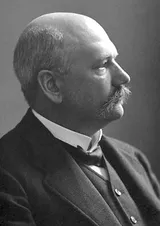
Friday Sep 16, 1853 to Tuesday Jul 5, 1927
Germany
Ludwig Karl Martin Leonhard Albrecht Kossel was a German biochemist and pioneer in the study of genetics. He was awarded the Nobel Prize for Physiology or Medicine in 1910 for his work in determining the chemical composition of nucleic acids, the genetic substance of biological cells.
On 16 September 1853, Albrecht Kossel was born in Rostock, Germany as the son of the merchant and Prussian consul Albrecht Karl Ludwig Enoch Kossel and his wife Clara Jeppe Kossel.
In 1872, Kossel attended the University of Strassburg to study medicine. He studied under Felix Hoppe-Seyler, who was head of the department of biochemistry, the only such institution in Germany at the time. He attended lectures by Anton de Bary, Waldeyer, August Kundt, and Baeyer.
In 1877, Kossel completed his studies at the University of Rostock and passed his German medical license exam.
After completing his university studies, Kossel returned to the University of Strassburg as a research assistant to Felix Hoppe-Seyler.
In 1883, Kossel left Strassburg to become Director of the Chemistry Division of the Physiological Institute at the University of Berlin. In this post, he succeeded Eugen Baumann and worked under the supervision of Emil du Bois-Reymond.
Kossel continued his previous work on the nucleic acids. During the period 1885 to 1901, he was able to isolate and name its five constituent organic compounds: adenine, cytosine, guanine, thymine, and uracil, which are the molecular structure necessary in the formation of stable DNA and RNA molecules.
In 1886, Kossel married Luise Holtzman, daughter of Adolf Holtzmann. Holtzmann was Professor at the University of Heidelberg, lecturing in German literature as well as Sanskrit.
He had three children, two of whom survived to maturity: Walther, born in 1888, and daughter Gertrude, born in 1889.
In 1895, Kossel was a professor of physiology as well as director of the Physiological Institute at the University of Marburg. Around this time, he began investigations into the chemical composition of proteins, the alterations in proteins during the transformation into peptone, the peptide components of cells, and other investigations.
In 1896, Kossel discovered histidine, then worked out the classical method for the quantitative separation of the "hexone bases" (the alpha-amino acids arginine, histidine, and lysine).
Kossel was a 1901-1924 Professor of physiology as well as director of the Physiological Institute at Heidelberg University.
Kossel was awarded the Nobel Prize in Physiology or Medicine in 1910 for his research in cell biology, the chemical composition of the cell nucleus, and for his work in isolating and describing nucleic acids. The award was presented on 10 December 1910.
In the autumn of 1911, Kossel was invited to the United States to deliver the Herter Lecture at Johns Hopkins. Traveling with his wife Luise and daughter Gertrude, he took the opportunity to travel and to visit acquaintances, one of which was Eugene W. Hilgard, professor emeritus of agricultural chemistry at the University of California at Berkeley, who was also his wife's cousin. He also visited and delivered lectures at several other universities, including the University of Chicago.
In 1913, Luise Kossel died of acute pancreatitis.
In 1917 Kossel was summoned by the government to pronounce that the allotted food provisions were sufficient. He refused this demand, would never declare untruths as truths.
In 1923, Kossel was honored by being named Germany's representative to the Eleventh Physiological Congress in Edinburgh, Scotland. When he appeared before the assembled scientists, they gave him an ovation that lasted several minutes. At the congress, he was conferred an honorary degree by the University of Edinburgh.
In 1924, Kossel became a director at the Institute for Protein Research at Heidelberg, which was part of the laboratory of the Medical Clinic. Kossel had helped to found it as the gift of a manufacturer. His research predicted the discovery of the polypeptide nature of the protein molecule.
In 1924, Kossel became professor emeritus but continued to lecture at Heidelberg University.
In April 1927, he attended the Lister Centenary Celebration held in England.
Kossel died quietly on 5 July 1927, after a recurring attack of angina pectoris. He is buried in Heidelberg, Germany.