
Historydraft Logo
null
17 events on this timeline
  1. Death obituart

    1888Paris, France

    In 1888, Nobel was astonished to read his own obituary, titled The merchant of death is dead, in a French newspaper. It was Alfred's brother Ludvig who had died; the obituary was eight years premature. The article disconcerted Nobel and made him apprehensive about how he would be remembered. This inspired him to change his will.

  2. Nobel's well

    Wednesday Nov 27, 1895Paris, France

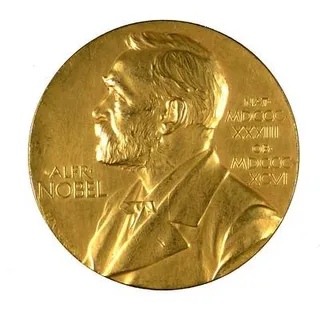
    Signing his well at the Swedish–Norwegian Club in Paris on 27 November 1895. To widespread astonishment, Nobel's last will specified that his fortune be used to create a series of prizes for those who confer the "greatest benefit on mankind" in physics, chemistry, physiology or medicine, literature, and peace. Nobel bequeathed 94% of his total assets, 31 million SEK (US$186 million in 2008), to establish the five Nobel Prizes.

  3. Alfred Nobel's death

    Thursday Dec 10, 1896Sanremo, Italy

    On 10 December 1896, Alfred Nobel died in his villa in San Remo, Italy, from a cerebral haemorrhage. He was 63 years old.

  4. Approving the well

    Monday Apr 26, 1897Oslo, Norway

    Owing to skepticism surrounding the will, it was not approved by the Storting in Norway until 26 April 1897.

  5. Awarding members

    Monday Jun 7, 1897Norway and Sweden

    Nobel's instructions named a Norwegian Nobel Committee to award the Peace Prize, the members of whom were appointed shortly after the will was approved in April 1897. Soon thereafter, the other prize-awarding organizations were designated. These were Karolinska Institute on 7 June, the Swedish Academy on 9 June, and the Royal Swedish Academy of Sciences on 11 June.

  6. Forming the Nobel Foundation

    Friday Jun 29, 1900Stockholm, Sweden

    The executors of the will, Ragnar Sohlman and Rudolf Lilljequist, formed the Nobel Foundation to take care of the fortune and to organise the awarding of prizes.the Nobel Foundation's newly created statutes were promulgated by King Oscar II.

  7. Family with most laureates

    1900sStockholm, Sweden

    The Curie family has received the most prizes, with four prizes awarded to five individual laureates. Marie Curie received the prizes in Physics (in 1903) and Chemistry (in 1911). Her husband, Pierre Curie, shared the 1903 Physics prize with her. Their daughter, Irène Joliot-Curie, received the Chemistry Prize in 1935 together with her husband Frédéric Joliot-Curie. In addition, the husband of Marie Curie's second daughter, Henry Labouisse, was the director of UNICEF when he accepted the Nobel Peace Prize in 1965 on that organisation's behalf.

  8. Forbidden laureates

    1938Germany

    In 1938 and 1939, Adolf Hitler's Third Reich forbade three laureates from Germany (Richard Kuhn, Adolf Friedrich Johann Butenandt, and Gerhard Domagk) from accepting their prizes. Each man was later able to receive the diploma and medal. Even though Sweden was officially neutral during the Second World War, the prizes were awarded irregularly.

  9. Second world war

    1940Norway

    No prize was awarded in any category from 1940 to 1942, due to the occupation of Norway by Germany. In the subsequent year, all prizes were awarded except those for literature and peace.

  10. Exempted from taxes

    1946Sweden and U.S.

    The Nobel Foundation is exempt from all taxes in Sweden (since 1946) and from investment taxes in the United States (since 1953).

  11. First to Refuse the Prize

    1960sStockholm, Sweden

    Two laureates have voluntarily declined the Nobel Prize. In 1964, Jean-Paul Sartre was awarded the Literature Prize but refused, stating, "A writer must refuse to allow himself to be transformed into an institution, even if it takes place in the most honourable form.

  12. Sveriges Riksbank Donation

    1968Brunkebergstorg, Stockholm, Sweden

    In 1968, Sweden's central bank Sveriges Riksbank celebrated its 300th anniversary by donating a large sum of money to the Nobel Foundation to be used to set up a prize in honour of Alfred Nobel.

  13. Economic Science's Prize

    Wednesday Dec 10, 1969Stockholm, Sweden

    The following year, the Sveriges Riksbank Prize in Economic Sciences in Memory of Alfred Nobel was awarded for the first time. The Royal Swedish Academy of Sciences became responsible for selecting laureates. The first laureates for the Economics Prize were Jan Tinbergen and Ragnar Frisch,The Board of the Nobel Foundation decided that after this addition, it would allow no further new prizes.

  14. Second to refuse the prize

    Dec, 1973Oslo, Norway

    Lê Đức Thọ, chosen for the 1973 Peace Prize for his role in the Paris Peace Accords, declined, stating that there was no actual peace in Vietnam.

  15. 2007 Foundation's value

    2007Stockholm, Sweden

    Since the 1980s, the Foundation's investments have become more profitable and as of 31 December 2007, the assets controlled by the Nobel Foundation amounted to 3.628 billion Swedish kronor (c. US$560 million).

  16. Youngest Laureat

    Thursday Dec 11, 2014Oslo, Norway

    Youngest person ever to receive a Nobel Prize was Malala Yousafzai; at the age of 17, received Nobel Peace Prize (2014).

  17. Oldest Laurate

    2019Stockholm, Sweden

    Oldest person ever to receive a Nobel Prize was John B. Goodenough; at the age of 97, received Nobel Prize in Chemistry (2019).