

Historydraft Logo
null
29 events on this timeline
  1. Stresemann's birth

    Friday May 10, 1878Köpenicker Straße 66, Berlin, German Empire (Present day Germany)

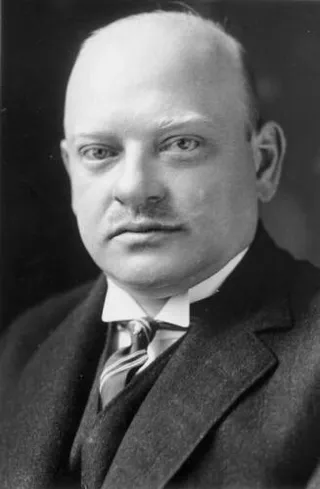
    Stresemann was born on 10 May 1878 in 66 Köpenicker Straße in Southeast Berlin, the youngest of seven children. His father worked as a beer bottler and distributor, and also ran a small bar out of the family home, as well as renting rooms for extra money.

  2. Early education

    1894Berlin, German Empire (Present day Germany)

    At the age of 16, Gustav joined the Andreas Gymnasium to study. His parents brought him to have an interest in books - He was especially passionate about history, with his teacher Mr. Wolff. He took an interest in Napoleon and Johann Wolfgang von Goethe, whom he later wrote about in his work 1924: Goethe und Napoleon: Ein Vortrag.

  3. His mother death and writing "Berlin letters"

    1895Berlin, German Empire (Present day Germany)

    His mother, Mathilde, died in 1895. From December 1895, Gustav wrote "Berlin letters" for the Dresdener Volks-Zeitung, often talking about politics and targeting Prussian conservatives.

  4. Joining the University of Berlin

    Apr, 1897Kaiserswerther Str., Berlin, German Empire (Present day Germany)

    In April 1897, Stresemann enrolled in the University of Berlin, where he was convinced by a businessman to study political economy instead of literature.

  5. Becoming a member in Burschenschaften movement

    1898Berlin, German Empire (Present day Germany)

    Stresemann also became active in Burschenschaften movement of student fraternities.

  6. Becoming an editor for DUZ magazine

    Apr, 1898Berlin, German Empire (Present day Germany)

    Stresemann became editor, in April 1898, of the Allgemeine Deutsche Universitäts-Zeitung, a newspaper run by Konrad Kuster, a leader in the liberal portion of the Burschenschaften. His editorials for the paper were often political, and dismissed most of the contemporary political parties as broken in one way or another.

  7. Transferring to the University of Leipzig

    1898Augustusplatz, Leipzig, German Empire (Present day Germany)

    In 1898, Stresemann left the University of Berlin, transferring to the University of Leipzig so that he could pursue a doctorate. He studied History, International Law, and took literature courses. Influenced by Dr. Martin Kriele, he also took courses in Economics.

  8. Completing his studies

    Jan, 1901Augustusplatz, Leipzig, German Empire (Present day Germany)

    Stresemann completed his studies in January 1901, submitting a thesis on the bottled beer industry in Berlin, which received a relatively high grade, but was a subject of mockery from colleagues. Stresemann's doctoral supervisor was the economist Karl Bücher.

  9. Stresemann and Saxon

    1902Kingdom of Saxony (Present day Saxony state, Germany)

    In 1902 he founded the Saxon Manufacturers' Association, and was its representative until 1911.

  10. Getting married

    1903Berlin, German Empire (Present day Germany)

    In 1903 Gustav married Käte Kleefeld (1883–1970), daughter of a wealthy Jewish Berlin businessman, and the sister of Kurt von Kleefeld, the last person in Germany to be ennobled (in 1918).

  11. Dresden town council

    1906Dresden, Kingdom of Saxony (Present day Saxony state, Germany)

    In 1906 Gustav was elected to the Dresden town council. Though he had initially worked in trade associations, Stresemann soon became a leader of the National Liberal Party in Saxony.

  12. Becoming a member in the Reichstag

    1907Leipziger Straße 4, Berlin, German Empire(Present Day Germany)

    In 1907, Stresemann was elected to the Reichstag, where he soon became a close associate of party chairman Ernst Bassermann.

  13. Losing his seats

    1912Leipziger Straße 4, Berlin, German Empire(Present Day Germany)

    Stresemann's support of expanded social-welfare programs did not sit well with some of the party's more conservative members, and he lost his post in the party's executive committee in 1912. Later that year he lost both his Reichstag and town council seats.

  14. German-American Economic Association

    1910sBerlin, German Empire (Present day Germany)

    Stresemann returned to business and founded the German-American Economic Association.and became one of the best-known leaders of German economy.

  15. Becoming the National Liberals' de facto leader

    1917German Empire (Present Day Germany)

    In 1914 he returned to the Reichstag. He was exempted from war service due to poor health. With Bassermann kept away from the Reichstag by either illness or military service, Stresemann soon became the National Liberals' de facto leader. After Bassermann's death in 1917, Stresemann succeeded him as the party leader.

  16. Joining the German Democratic Party

    1918Weimar Republic (Present day Germany)

    After the war, Stresemann briefly joined the German Democratic Party, formed from a merger of the Progressives with the left wing of the National Liberals. However, he was quickly expelled for his association with the right wing.

  17. Forming the German People's Party

    Sunday Nov 24, 1918Wiemar Republic (Present Day Germany)

    Stresemann then gathered the main body of the old National Liberal Party—including most of its center and right factions—into the German People's Party, with himself as chairman. Most of its support came from the middle class and upper-class Protestants.

  18. Becoming Chancellor and Foreign Minister

    Monday Aug 13, 1923Wiemar Republic (Present Day Germany)

    On 13 August 1923, Stresemann was appointed Chancellor and Foreign Minister of a grand coalition government in the so-called year of crises (1923). In social policy, a new system of binding arbitration was introduced in October 1923 in which an outside arbitrator had the final say in industrial disputes.

  19. The passive resistance against the Occupation

    Wednesday Sep 26, 1923Wiemar Republic (Present Day Germany)

    On the 26 September 1923, Stresemann announced the end to the passive resistance against the Occupation of the Ruhr by the French and Belgians, in tandem with an Article 48 (of the Weimar Constitution) state of emergency proclamation by President Ebert that lasted until February 1924.

  20. Removing SPD/KPD governments

    Monday Oct 29, 1923Weimar Republic (Present Day Germany)

    In October 1923, the Stresemann government used Article 48 to replace the legally elected SPD-Communist coalition government of Saxony on 29 October, and that of Thuringia on 6 November, by commissioners. By this time, Stresemann was convinced that accepting the republic and reaching an understanding with the Allies on the reparations issue was the only way for Germany to gain the breathing room it needed to rebuild its battered economy.

  21. Hyperinflation and a new currency

    Nov, 1923Weimar Republic (Present Day Germany)

    Hyperinflation in the Weimar Republic would reach its peak in November 1923. Stresemann introduced a new currency, the Rentenmark, to end hyperinflation. He also persuaded the French to pull back from the Ruhr in return for a promise that reparations payments would resume. That was part of his larger strategy of "fulfillment".

  22. Stresemann's cabinet resignation

    Nov, 1923Weimar Republic (Present Day Germany)

    In early November 1923, partly because of the reaction to the overthrowing of the SPD/KPD governments in Saxony and Thuringia, the Social Democrats withdrew from his reshuffled government and after a motion of confidence was voted down on 23 November 1923 Stresemann and his cabinet resigned.

  23. Assuming the position as Foreign Minister

    Friday Nov 30, 1923Weimar Republic (Present Day Germany)

    Stresemann remained as Foreign Minister in the government of his successor, Centrist Wilhelm Marx. He remained foreign minister for the rest of his life in eight successive governments ranging from the centre-right to the centre-left.

  24. Dawes Plan

    Saturday Aug 16, 1924Paris, France

    His first notable achievement was the Dawes Plan of 1924, which successfully resolved the issue of World War I reparations that Germany had to pay. It ended a crisis in European diplomacy following World War I and the Treaty of Versailles, it reduced Germany's overall reparations commitment and reorganized the Reichsbank.

  25. Proposing an agreement with France

    1925Weimar Republic (Present Day Germany)

    In 1925, when he first proposed an agreement with France, he made it clear that in doing so he intended to "gain a free hand to secure a peaceful change of the borders in the East and concentrate on a later incorporation of German territories in the East".

  26. Trade war against Poland

    1925Poland

    In the same year, while Poland was in a state of political and economic crisis, Stresemann began a trade war against the country. Stresemann hoped for an escalation of the Polish crisis, which would enable Germany to regain territories ceded to Poland after World War I, and he wanted Germany to gain a larger market for its products there. So Stresemann refused to engage in any international cooperation that would have "prematurely" restabilized the Polish economy.

  27. Locarno Treaties

    Tuesday Dec 1, 1925London, England, United Kingdom

    Stresemann said that Germany alone should not make sacrifices for peace; European countries should cede colonies to Germany; the disarmament control commission should leave Germany; the Anglo-French occupation of the Rhineland should be ended; and Britain and France should disarm as Germany had done. The Treaties were signed in October 1925 at Locarno. Germany officially recognized the post-World War I western border for the first time, and was guaranteed peace with France, and promised admission to the League of Nations and evacuation of the last Allied occupation troops from the Rhineland.

  28. Nobel Prize

    Friday Dec 10, 1926Oslo City Hall, Oslo, Norway

    Stresemann was co-winner of the Nobel Peace Prize in 1926.

  29. Stresemann's death

    Thursday Oct 3, 1929Weimar Republic (Present Day Germany)

    Gustav Stresemann died of a stroke on 3 October 1929 at the age of 51. His gravesite is situated in the Luisenstadt Cemetery at Südstern in Berlin Kreuzberg, and includes work by the German sculptor Hugo Lederer.