
Birth
John Maynard Keynes was born in Cambridge, Cambridgeshire, England, to an upper-middle-class family.

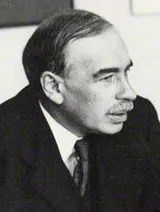
Monday Jun 4, 1883 to Saturday Apr 20, 1946
England, UK
John Maynard Keynes, 1st Baron Keynes (5 June 1883 – 21 April 1946), was a British economist whose ideas fundamentally changed the theory and practice of macroeconomics and the economic policies of governments. He built on and greatly refined earlier work on the causes of business cycles, and was one of the most influential economists of the 20th century. Widely considered the founder of modern macroeconomics, his ideas are the basis for the school of thought known as Keynesian economics, and its various offshoots.
John Maynard Keynes was born in Cambridge, Cambridgeshire, England, to an upper-middle-class family.
In May 1904, he received a first class BA in mathematics.
He enjoyed his work at first, but by 1908 had become bored and resigned his position to return to Cambridge and work on probability theory, at first privately funded only by two dons at the university – his father and the economist Arthur Pigou.
In October 1908, Keynes's Civil Service career began as a clerk in the India Office.
He founded the Political Economy Club, a weekly discussion group.
By 1909 Keynes had published his first professional economics article in The Economic Journal, about the effect of a recent global economic downturn on India.
By 1913 he had published his first book, Indian Currency and Finance.
In January 1915, Keynes took up an official government position at the Treasury.
In the 1917 King's Birthday Honors, Keynes was appointed Companion of the Order of the Bath for his wartime work.
Keynes was appointed financial representative for the Treasury to the 1919 Versailles peace conference. He was also appointed Officer of the Belgian Order of Leopold.
Keynes had completed his A Treatise on Probability before the war, but published it in 1921.
In 1922 Keynes continued to advocate reduction of German reparations with A Revision of the Treaty.
From 1924 he was also advocating a fiscal response, where the government could create jobs by spending on public works.
In 1921, Keynes wrote that he had fallen "very much in love" with Lydia Lopokova, a well-known Russian ballerina and one of the stars of Diaghilev's Ballets Russes. In the early years of his courtship, he maintained an affair with a younger man, Sebastian Sprott, in tandem with Lopokova, but eventually chose Lopokova exclusively. They were married in 1925.
Treatise on Money, was published in 1930 in two volumes.
The General Theory of Employment, Interest and Money was published in 1936.
Keynes argued in How to Pay for the War, published in 1940, that the war effort should be largely financed by higher taxation and especially by compulsory saving (essentially workers lending money to the government), rather than deficit spending, in order to avoid inflation.
In September 1941 he was proposed to fill a vacancy in the Court of Directors of the Bank of England, and subsequently carried out a full term from the following April.
In June 1942, Keynes was rewarded for his service with a hereditary peerage in the King's Birthday Honors.
On 7 July his title was gazetted as "Baron Keynes, of Tilton, in the County of Sussex" and he took his seat in the House of Lords on the Liberal Party benches.
As the Allied victory began to look certain, Keynes was heavily involved, as leader of the British delegation and chairman of the World Bank commission, in the mid-1944 negotiations that established the Bretton Woods system.
Keynes died of a heart attack at Tilton, his farmhouse home near Firle, East Sussex, England, on 21 April 1946, at the age of 62.
The global financial crisis of 2007–08 led to public skepticism about the free market consensus even from some on the economic right. In March 2008, Martin Wolf, chief economics commentator at the Financial Times, announced the death of the dream of global free-market capitalism.
By the end of December 2008, the Financial Times reported that "the sudden resurgence of Keynesian policy is a stunning reversal of the orthodoxy of the past several decades".