
Birth
On 11 June 1899, Yasunari Kawabata was born into a well-established family in Osaka, Japan.

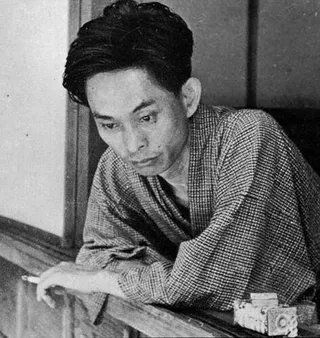
Sunday Jun 11, 1899 to Sunday Apr 16, 1972
Japan
Yasunari Kawabata was a Japanese novelist and short story writer whose spare, lyrical, subtly-shaded prose works won him the Nobel Prize for Literature in 1968, the first Japanese author to receive the award. His works have enjoyed broad international appeal and are still widely read.
On 11 June 1899, Yasunari Kawabata was born into a well-established family in Osaka, Japan.
Yasunari was orphaned by the time he was four, after which he lived with his grandparents.
In September 1906, Kawabata's grandmother died when Yasunari was seven.
Yasunari had an older sister who was taken in by an aunt, and whom he met only once, after the death of his parents, at the age of ten in July 1909.
Yasunari's sister died shortly after meeting her, when he was 11.
In May 1914, Kawabata's grandfather died when he was fifteen.
In January 1916, he moved into a boarding house near the junior high school (comparable to a modern high school) to which he had formerly commuted by train.
After graduating from junior high school in March 1917, Kawabata moved to Tokyo just before his 18th birthday.
Kawabata had a painful love affair with Hatsuyo Ito. Whom he met when he was 20 years old. An unsent love letter to her was found at his former residence in Kamakura, Kanagawa Prefecture, in 2014. According to Kaori Kawabata, Kawabata's son-inlaw, an unpublished entry in the author's diary mentions that Hatsuyo was raped by a monk at the temple she was staying at, which led her to break off their engagement.
Kawamata hoped to pass the exams of First Upper School, which was under the direction of the Tokyo Imperial University. He succeeded in the exam the same year and entered the Humanities Faculty as an English major in July 1920. A young Kawabata, by this time, was enamored by the works of another Asian Nobel laureate, Rabindranath Tagore.
During university, Kawamata changed faculties to Japanese literature and wrote a graduation thesis titled, "A short history of Japanese novels".
While still a university student, Kawabata re-established the Tokyo University literary magazine Shin-shichō ("New Tide of Thought"), which had been defunct for more than four years. There he published his first short story, "Shokonsai ikkei" ("A View from Yasukuni Festival") in 1921.
Kawabata graduated in 1924, by which time he had already caught the attention of Kikuchi Kan, a Japanese author, and other noted writers and editors through his submissions to Kikuchi's literary magazine, the Bungei Shunju.
In October 1924, Kawabata, Riichi Yokomitsu, and other young writers started a new literary journal Bungei Jidai ("The Artistic Age"). This journal was a reaction to the entrenched old school of Japanese literature, specifically the Japanese movement descended from Naturalism, while it also stood in opposition to the "workers'" or proletarian literature movement of the Socialist/Communist schools.
Kawabata started to achieve recognition for a number of his short stories shortly after he graduated, receiving acclaim for "The Dancing Girl of Izu" in 1926, a story about a melancholy student who, on a walking trip down Izu Peninsula, meets a young dancer, and returns to Tokyo in much-improved spirits.
In 1926, Kawabata got married to Hideko.
In the 1920s, Kawabata was living in the plebeian district of Asakusa, Tokyo. During this period, Kawabata experimented with different styles of writing.
In Asakusa kurenaidan (The Scarlet Gang of Asakusa), one of Kawabata's novels published in 1930, he explores the lives of the demimonde and others on the fringe of society, in a style echoing that of late Edo period literature.
In 1933, Kawabata protested publicly against the arrest, torture, and death of the young leftist writer Takiji Kobayashi in Tokyo by the Tokkō special political police.
Kawabata relocated from Asakusa to Kamakura, Kanagawa Prefecture, in 1934 and, although he initially enjoyed a very active social life among the many other writers and literary people residing in that city during the war years and immediately thereafter, in his later years he became very reclusive.
In a 1934 published work Kawabata wrote: "I feel as though I have never held a woman's hand in a romantic sense... Am I a happy man deserving of pity?”.This does not have to be taken literally, but it does show the type of emotional insecurity that Kawabata felt, especially experiencing two painful love affairs at a young age. One of those painful love episodes was with Hatsuyo Ito.
One of his most famous novels was Snow Country, which started in 1934 and first published in installments from 1935 through 1937. It established Kawabata as one of Japan's foremost authors and became an instant classic, described by Edward G. Seidensticker as "perhaps Kawabata's masterpiece".
The book that Kawabata himself considered his finest work is The Master of Go (1951). It is a semi-fictional novel recounting of a major Go match in 1938, in which the game master loses to his younger competitive, symbolizing the defeat of Japan in World War II.
After the end of World War II, Kawabata's success continued with novels such as Thousand Cranes (a story of ill-fated love) in 1952, The Sound of the Mountain, serialized between 1949 and 1954, The House of the Sleeping Beauties in 1961, Beauty and Sadness in 1964, and The Old Capital in 1962.
As the president of Japanese P.E.N. for many years after the war, from 1948 to 1965, Kawabata was a driving force behind the translation of Japanese literature into English and other Western languages.
Kawabata was appointed an Officer of the Order of Arts and Letters of France in 1960.
In 1961, Kawabata was awarded Japan's Order of Culture.
On 16 October 1968, Kawabata was awarded the Nobel Prize for Literature, the first Japanese person to receive such a distinction. In awarding the prize "for his narrative mastery, which with great sensibility expresses the essence of the Japanese mind", the Nobel Committee cited three of his novels, Snow Country, Thousand Cranes, and The Old Capital.
On 16 April 1972, Kawabata apparently committed suicide by gassing himself, but a number of close associates and friends, including his widow, consider his death to have been accidental, he mistakenly unplugged the gas tap while preparing a bath.