
Bible was translated into Aramaic
Between the 1st and the 3rd centuries AD, ancient Arameans adopted Christianity, thus replacing the old polytheistic Aramean religion. In the same tame, Christian Bible was translated into Aramaic.

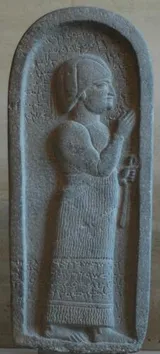
1110s BC to 730s BC
Syria
The Arameans were an ancient Semitic-speaking people in the Near East, first recorded in historical sources from the late 12th century BCE. The Aramean homeland was known as the land of Aram, encompassing the central regions of modern Syria. At the beginning of the 1st millennium BCE, a number of Aramean states were established throughout the western regions of the ancient Near East. The most notable among them was the Kingdom of Aram-Damascus, which reached its height in the second half of the 9th century BCE, during the reign of King Hazael. A distinctive Aramaic alphabet was also developed and used for writing in the Old Aramaic language.
Between the 1st and the 3rd centuries AD, ancient Arameans adopted Christianity, thus replacing the old polytheistic Aramean religion. In the same tame, Christian Bible was translated into Aramaic.
Since the Arab conquest of the Near East in the 7th century, the remaining communities of Christian Arameans converged around local ecclesiastical institutions, that were by that time already divided along denominational lines.
Since the Arab conquest of the Near East in the 7th century, the remaining communities of Christian Arameans converged around local ecclesiastical institutions, that were by that time already divided along denominational lines.
Amrit was a Phoenician port located near present-day Tartus in Syria. Founded in the third millennium BC, Marat was the northernmost important city of ancient Phoenicia and a rival of nearby Arwad.
Aramean pushed back by the newly arrived Seljuk Turks, who took Antioch (1084). Later establishment of Crusader states (1098), the Principality of Antioch, and the County of Edessa, created new challenges for local Aramaic-speaking Christians, both Oriental Orthodox and Eastern Orthodox.
The toponym A-ra-mu appears in an inscription at the East Semitic speaking kingdom of Ebla listing geographical names, and the term Armi, which is the Eblaite term for nearby Idlib, occurs frequently in the Ebla tablets (c. 2300 BCE).
The toponym A-ra-mu appears in an inscription at the East Semitic speaking kingdom of Ebla listing geographical names, and the term Armi, which is the Eblaite term for nearby Idlib, occurs frequently in the Ebla tablets (c. 2300 BCE).
One of the annals of Naram-Sin of Akkad (c. 2250 BCE) mentions that he captured "Dubul, the ensí of A-ra-me", in the course of a campaign against Simurrum in the northern mountains.
One of the annals of Naram-Sin of Akkad (c. 2250 BCE) mentions that he captured "Dubul, the ensí of A-ra-me", in the course of a campaign against Simurrum in the northern mountains.
The first known Aramaic inscription was the Carpentras Stela, found in southern France in 1704; it was considered to be Phoenician text at the time.
The Middle Assyrian Empire (1365–1050 BCE), which had dominated the Near East and Asia Minor since the first half of the 14th century BCE, began to shrink rapidly after the death of Ashur-bel-kala, its last great ruler in 1056 BCE, and the Assyrian withdrawal allowed the Arameans and others to gain independence and take firm control of what was then Eber-Nari (and is today Syria) during the late 11th century BCE.
The emergence of the Arameans occurred during the Bronze Age collapse (1200–900 BCE), which saw great upheavals and mass movements of peoples across the Middle East, Asia Minor, The Caucasus, East Mediterranean, North Africa, Ancient Iran, Ancient Greece, and Balkans, leading to the genesis of new peoples and polities across these regions.
The Kingdom of Aram-Damascus was an Aramean state around Damascus in Syria, from the late 12th century BC to 732 BC.
Bit Baḫiani was an independent Aramean city-state kingdom (c. 1200 – 808 BC) with its capital at Guzana (modern day Tell Halaf).
By the late 12th century BCE, the Arameans were firmly established in Syria; however, they were conquered by the Middle Assyrian Empire, as had been the Amorites and Ahlamu before them.
The first certain reference to the Arameans appears in an inscription of Tiglath-Pileser I (1115–1077 BCE), which refers to subjugating the "Ahlamû-Arameans" (Ahlame Armaia). Shortly after, the Ahlamû disappear from Assyrian annals, to be replaced by the Arameans (Aramu, Arimi).
The Arameans conquered Sam'al, also known as Yaudi, the region from Arpad to Aleppo, which they renamed Bît-Agushi, and Til Barsip, which became the chief town of Bît-Adini, also known as Beth Eden. North of Sam'al was the Aramean state of Bit-Gabbari, which was sandwiched between the Post-Hittite states of Carchemish, Gurgum, Khattina, Unqi, and the state of Tabal.
King Tou was the king of Hamath, an ancient city located in Syria.
During the 11th and the 10th centuries BCE, the Arameans conquered Sam'al (modern Zenjirli), also known as Yaudi, the region from Arpad to Aleppo.
The Middle Assyrian Empire (1365–1050 BCE), which had dominated the Near East and Asia Minor since the first half of the 14th century BCE, began to shrink rapidly after the death of Ashur-bel-kala, its last great ruler in 1056 BCE, and the Assyrian withdrawal allowed the Arameans and others to gain independence and take firm control of what was then Eber-Nari (and is today Syria) during the late 11th century BCE. It is from this point that the region was called Aramea.
"Northern Syria had been the homeland of the Aramaeans since the late second millennium B.C. Syriac-speaking people were the descendants of these Aramaeans.
Assyrian annals from the end of the Middle Assyrian Empire c. 1050 BCE and the rise of the Neo-Assyrian Empire in 911 BCE contain numerous descriptions of battles between Arameans and the Assyrian army.
Bit Adini, a city or region of Syria, called sometimes Bit Adini in Assyrian sources, was an Aramaean state that existed as an independent kingdom during the 10th and 9th centuries BC, with its capital at Til Barsib (now Tell Ahmar).
Tabrimmon was an Aramaean king, but there is little known about him. According to the Bible, he is the son of Hezion and the father of Ben-Hadad I.
The Aramaic language was adopted as the lingua franca of the Neo-Assyrian Empire in the 8th century BCE, and the native Assyrians and Babylonians began to make a gradual language shift towards Aramaic as the most common language of public life and administration.
King Kapara was an Aramean king of Bit Bahiani, one of the Post-Hittite states, centered in Guzana (modern Tell Halaf, in northeastern Syria).
During the 10th century, the Byzantine Empire gradually reconquered much of northern Syria.
The Aramean kingdoms, like much of the Near East and Asia Minor, were subjugated by the Neo Assyrian Empire (911–605 BCE).
The Kilamuwa Stele is a 9th-century BC stele of King Kilamuwa, from the Kingdom of Bit-Gabbari. He claims to have succeeded where his ancestors had failed, in providing for his kingdom. The inscription is known as KAI 24.
Irhuleni was King of Hamath. He led a coalition against the Assyrian expansion under Shalmaneser III, alongside Hadadezer of Damascus.
Old Aramaic refers to the earliest stage of the Aramaic language, known from the Aramaic inscriptions discovered since the 19th century.
Arpad was an ancient Aramaean Syro-Hittite city located in north-western Syria, north of Aleppo. It became the capital of the Aramaean state of Bit Agusi established by Gusi of Yakhan in the 9th century BC.
Ben-Hadad I, son of Tabrimmon and grandson of Hezion, was king of Aram-Damascus between 885 BC and 865 BC.
Tabrimmon, also as Tabrimon, also as Tabremon in Douay–Rheims, was an Aramaean king, but there is little known about him.
The Israelite–Aramean War was an armed conflict between the Israelites and the Arameans and Amorites that took place in the Levantine regions of Aram and Bashan. It is generally considered to have taken place around the year 874 BCE.
Bar-Hadad II was the king of Aram Damascus between 865 and 842 BC.
The Battle of Qarqar was fought in 853 BCE when the army of the Neo-Assyrian Empire led by Emperor Shalmaneser III encountered an allied army of eleven kings at Qarqar led by Hadadezer, called in Assyrian Adad-idir and possibly to be identified with King Benhadad II of Aram-Damascus; and Ahab, king of Israel.
The old Aramaic period (850 to 612 BC) saw the production and dispersal of inscriptions due to the rise of the Arameans as a major force in the Ancient Near East.
Hazael was an Aramean king who is mentioned in the Bible. Under his reign, Aram-Damascus became an empire that ruled over large parts of Syria and the Land of Israel.
Atarshumki I was the King of Bit Agusi in ancient Syria; he was the son of Arames.
King Rezin of Aram ruled from Damascus during the 8th century BC. During his reign, he was a tributary of King Tiglath-Pileser III of Assyria. He was the last king of Aram of Damascus.
The "Hadad Statue" is an 8th-century BC stele of King Panamuwa I, from the Kingdom of Bit-Gabbari in Sam'al. It currently occupies a prominent position in the Vorderasiatisches Museum Berlin.
Zakkur was the ancient king of Hamath and Luhuti (also known as Nuhašše) in Syria. He ruled around 785 BC.
Hezion was a king of Aram Damascus according to the genealogy given in the Books of Kings (1 Kings 15:18).
Bar-Hadad III was king of Aram Damascus, the son, and successor of Hazael. His succession is mentioned in 2 Kings (13:3, 13:24).
King Rezin of Aram ruled from Damascus during the 8th century BC. During his reign, he was a tributary of King Tiglath-Pileser III of Assyria.
Tiglath-Pileser III was a prominent king of Assyria in the eighth century BCE (ruled 745–727 BCE) who introduced advanced civil, military, and political systems into the Neo-Assyrian Empire.
The Assyrian king, Tiglath-pileser III, occupied Arpad (currently Tel Rifaat), the center of the Aramaic resistance in northern Syria in 740 BC.
Tiglath-Pileser III also overthrew the Kingdom of Samaria in 734 BC.
Tiglath-Pileser III occupied the Kingdom of Damascus in 732 BC.
In 732 BCE Aram-Damascus fell and was conquered by the Assyrian king Tiglath-Pileser III. The Assyrians named their Aramean colonies Eber Nari, whilst still using the term Aramean to describe many of its peoples.
Atarshumki I was the King of Bit Agusi in ancient Syria; he was the son of Arames. The capital of Bit Agusi was Arpad.
The Neirab steles, a pair of 7th century BCE Aramaic inscriptions found in 1891 in Al-Nayrab near Aleppo, Syria.
The Aramean regions became a battleground between the Babylonians and the Egyptian 26th Dynasty, which had been installed by the Assyrians as vassals after they had conquered Egypt, ejected the previous Nubian dynasty, and destroyed the Kushite Empire.
The Neo Assyrian Empire descended into a bitter series of brutal internal wars from 626 BCE, weakening it greatly.
Aramea/Eber-Nari was then ruled by the succeeding Neo-Babylonian Empire (612–539 BCE), initially headed by a short-lived Chaldean dynasty. The Aramean regions became a battleground between the Babylonians and the Egyptian 26th Dynasty, which had been installed by the Assyrians as vassals after they had conquered Egypt, ejected the previous Nubian dynasty, and destroyed the Kushite Empire.
Aramaic is a Semitic language that originated among the Arameans in the ancient region of Syria.
The Arameans were later conquered by the Achaemenid Empire (539–332 BCE). However, little changed from the Neo-Assyrian and Neo-Babylonian times, as the Persians, seeing themselves as successors of previous empires, maintained Imperial Aramaic language as the main language of public life and administration.
The Babylonians remained masters of the Aramean lands only until 539 BCE.
The Arameans were later conquered by the Achaemenid Empire (539–332 BCE).
The Babylonians remained masters of the Aramean lands only until 539 BCE when the Persian Achaemenid Empire overthrew Nabonidus, the Assyrian born last king of Babylon.
The first process (Syrianization) was initiated during the 5th century, when the ancient Greek custom of using Syrian labels for Arameans and their language, started to gain acceptance among Aramean literary and ecclesiastical elites.
The Story of Aḥiqar, also known as the Words of Aḥiqar, is a story first attested in Imperial Aramaic from the fifth century BCE on papyri from Elephantine, that circulated widely in the Middle and Near East. It has been characterized as "one of the earliest 'international books' of world literature".
Conquests of Alexander the Great (336-323 BCE) marked the beginning of a new era in the history of the entire Near East, including regions inhabited by Arameans.
Coele-Syria was a region of Syria in classical antiquity. It probably derived from the Aramaic word for all of the regions of Syria, but it was most often applied to the Beqaa Valley between Lebanon and the Anti-Lebanon mountain ranges.
The conquests of Alexander the Great marked the beginning of a new era in the history of the entire Near East, including regions inhabited by Arameans.
By the end of the 4th century BCE, two newly created Hellenistic states emerged as main pretenders for regional supremacy: the Seleucid Empire (305–64 BCE), and the Ptolemaic Empire (305–30 BCE).
In the 4th Century BC, Rome had started annexing Etruscan cities. This led to the loss of the northern Etruscan provinces. During the Roman–Etruscan Wars, Etruria was conquered by Rome in the 3rd century BC.
After the establishment of Roman rule in the region of Syria proper (western of Euphrates) during the 1st century BCE, Aramean lands became the frontier region between two empires, Roman and Parthian, and later between their successor states, Byzantine and Sasanid empires. Several minor states also existed in frontier regions, the most notable of them being the Kingdom of Osroene, centered in the city of Edessa, known in the Aramaic language as Urhay.
After the establishment of Roman rule in the region of Syria proper (western of Euphrates) during the 1st century BCE, Aramean lands became the frontier region between two empires, Roman and Parthian.